The partnership will support Shell’s Balik-Likha initiative, which challenges young designers to turn used clothing into functional fashion and interior design products.
Under the agreements, SoFA will support the participation and development of fashion and interior design students, while DOST-PTRI will provide technical services, training and access to textile research and innovation.
Shell, meanwhile, will support program activities, learning sessions and immersions designed to help students translate design concepts into practical applications.
From waste to design
The partnerships were announced during a signing ceremony that also introduced the SoFA student finalists participating in Balik-Likha 2026.
Now in its third year, Balik-Likha is a design advocacy initiative under Shell’s Likas-Kaya campaign. Apart from encouraging textile reuse, the program asks students to develop designs addressing themes such as disaster preparedness, mental health and Filipino values.
SoFA students have participated in Balik-Likha since 2024. The new agreements are expected to expand opportunities for student learning, technical capability-building and exposure to circular-design and material-reuse practices.
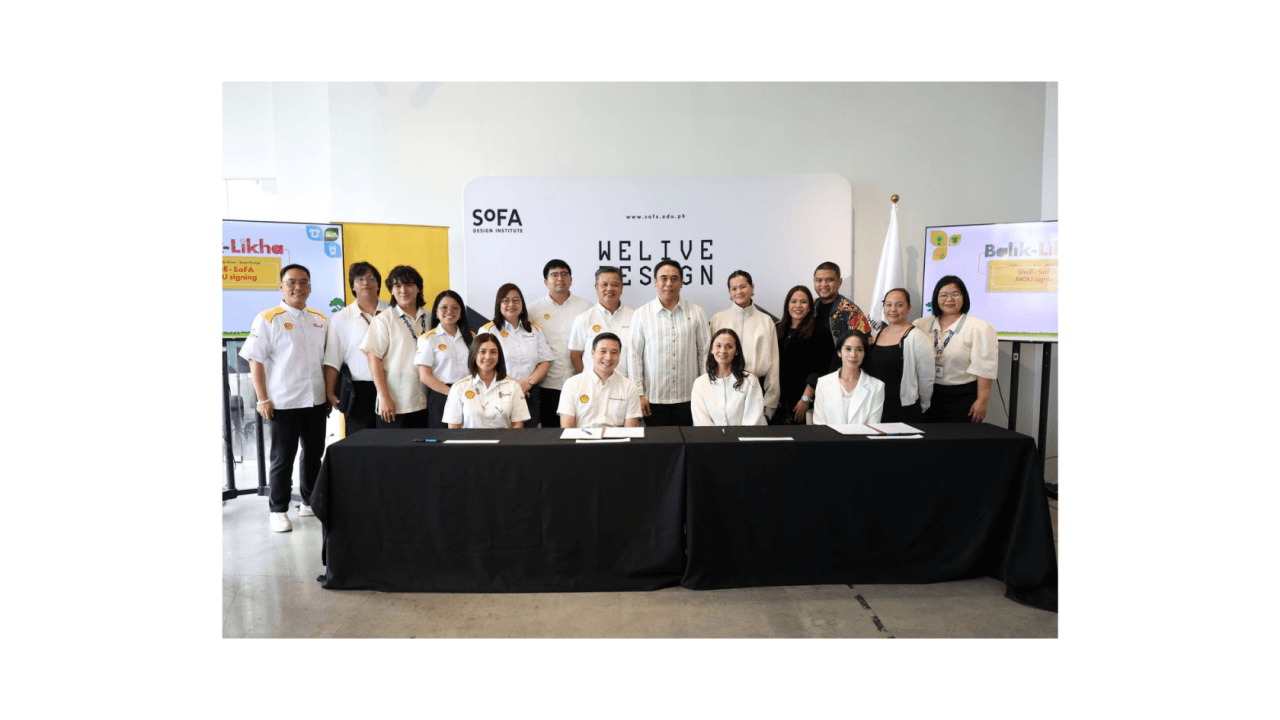
“By bringing together creative talent, scientific expertise and practical industry support, we can help young designers develop ideas that encourage textile reuse and create value for people and communities,” Shell Pilipinas vice president for corporate relations Serge Bernal said.
Textile challenge
The initiative seeks to address a broader environmental problem posed by textile production and disposal.
According to the United Nations Environment Program, fashion and textiles account for an estimated 2 percent to 8 percent of global greenhouse gas emissions, while about 92 million tons of textile waste are generated annually.
The industry also has environmental impacts related to water consumption, chemical use and microplastic pollution.
Through Balik-Likha, the partners aim to give students opportunities to apply their creativity, technical knowledge and problem-solving skills to real-world challenges while exploring ways to turn discarded materials into useful products.
The collaboration builds on Shell’s other circularity efforts in the Philippines, including its support for the Anthill Circularity Hub in Payatas, Quezon City, which connects material reuse with community-based livelihood opportunities.
Shell said collaboration among schools, government institutions, communities and businesses could help strengthen local capabilities and encourage practical applications of circular-design principles. —Ed: Corrie S. Narisma