
The policy-making body also asked the Supreme Court to fast-track the construction of a permanent, disaster-resilient Hall of Justice at the South Road Properties (SRP) in Cebu City.
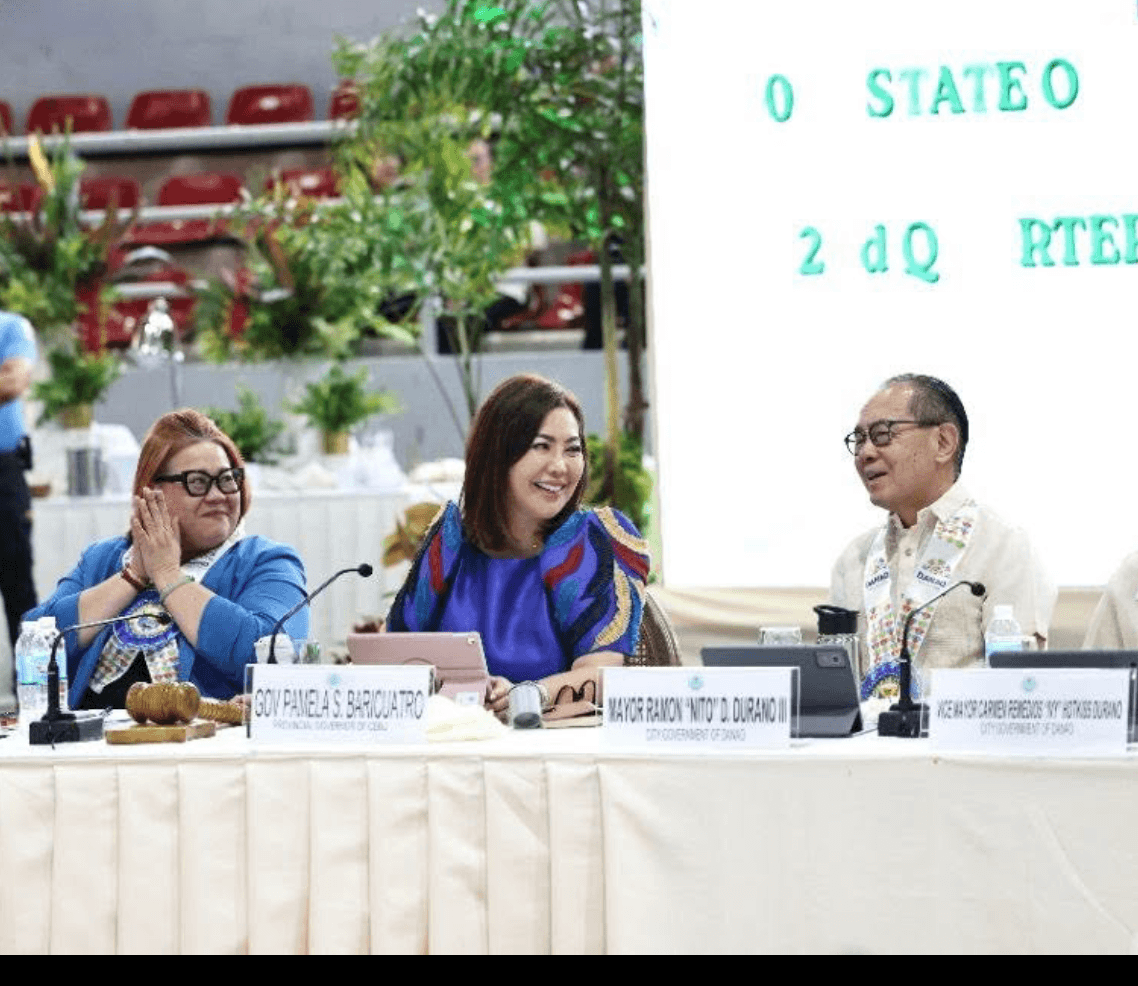
The requests were contained in separate resolutions passed by the RDC-7 during the full council's second-quarter meeting on June 24 at the Danao City Civic Center. The resolutions will be transmitted to the concerned national government agencies for appropriate action.
The meeting was presided over by Gov. Pamela Baricuatro,RDC-7 chair, and attended by regional directors of national government agencies, as well as representatives from the private sector and the business community.
According to Baricuatro, the release of the funds is crucial to restoring essential public facilities, supporting affected residents, and ensuring communities can fully recover from the impacts of the two calamities that struck Cebu just two months apart.
In 2025, Cebu was hit by a magnitude 6.9 earthquake that struck northern Cebu on Sept. 30.
Then, on Nov. 4, Typhoon Tino brought unprecedented rainfall, triggering floods in Cebu and Mandaue cities, as well as in towns across northern and central Cebu.
The two calamities caused extensive damage to infrastructure, government facilities, school buildings and homes.
Partial release
The Department of Public Works and Highways in Central Visayas (DPWH-7) proposed 148 repair and rehabilitation projects involving roads, bridges and school buildings worth about P4.5 billion under the DPWH Quick Response Fund (QRF).
Of the amount, only about P856 million has been released so far.
The RDC-7 recommended that the DPWH central office prioritize the approval and release of the remaining P3.6 billion in QRF allocations needed to complete the rehabilitation of earthquake-damaged structures in Cebu.
The council also endorsed a request for the Department of National Defense (DND) to expedite the approval and release of funds from the National Disaster Risk Reduction and Management Fund (NDRRMF).
Among the projects awaiting funding is the Disaster Rehabilitation and Recovery Assistance Program (DRRAP), which allocates P2.9 billion for 14 local government units (LGUs) in Cebu affected by Typhoon Tino.
These LGUs are the municipalities of Consolacion, Liloan, Compostela, Balamban, Asturias, Poro, San Francisco, Pilar and Tudela, and the cities of Danao, Cebu, Mandaue, Talisay and Toledo.
The RDC-7 also appealed for the release of about P105.6 million in NDRRMF funding requested by DPWH-7 for the construction of tent cities and the repair of additional earthquake-damaged buildings in the province.
Hall of Justice
In another resolution, the RDC-7 asked the Supreme Court to expedite the construction of a permanent, disaster-resilient Hall of Justice on the 1.5-hectare lot at the South Road Properties (SRP) in Cebu City, which the city donated for that purpose on Jan. 30, 2019.
The proposed judicial complex is intended to house the Court of Appeals-Visayas Station, trial courts and other justice-related offices in one location to provide better public access and ensure the smooth flow of court operations.
Six years later, construction has yet to begin.
In the meantime, the courts have been displaced twice by strong earthquakes.
The trial courts were forced to transfer to the Qimonda IT Center Building at the North Reclamation Area after the Palace of Justice inside the Capitol compound was damaged by a strong earthquake on Oct. 15, 2013.
The courts were transferred again after the magnitude 6.9 earthquake rendered the Qimonda building structurally unsafe.
Still largest outside Luzon
Despite the calamities, Central Visayas, composed of Cebu and Bohol, continued to grow in 2025 by 3.7 percent, bringing its gross regional domestic product to P1.32 trillion.
In her State of the Region Address delivered during the RDC-7 full council meeting, Baricuatro said Central Visayas remained the largest economy outside Luzon and the fourth-largest in the country.
The growth, she added, was driven by the services sector, which remained resilient and dynamic.
Baricuatro, however, said the industry sector showed cautious recovery, while agriculture contracted slightly, serving as a reminder of the urgency to strengthen climate resilience and food systems.
"Because our private and public sectors refused to concede, we recorded unemployment and underemployment rates significantly lower than the national average. We protected jobs; we preserved dignity," she said. —Ed: Corrie S. Narisma

Contributor