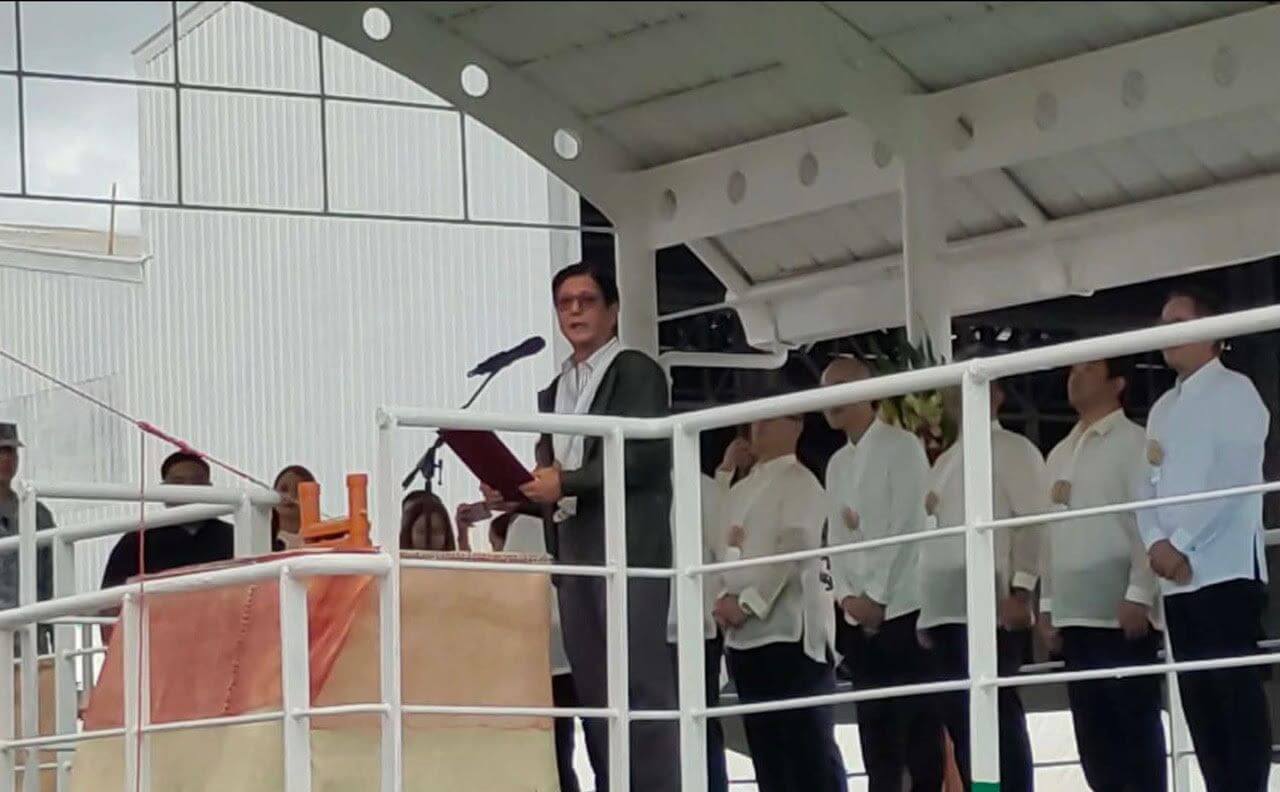
In his speech, the President said the delivery of KAMSARMAX vessel SC-443 marked a historic milestone for the Philippine shipping industry.
“It proves, once again, that what is made in the Philippines can stand shoulder to shoulder with the best of anywhere in the world,” he said.
The President said the feat sent a clear signal to the world that the country was ready to lead in the global transition toward low-carbon and sustainable maritime transport.
Rising to the challenge
It also showed the Filipinos’ capacity to rise to the challenge of a rapidly changing world, he added.
The accomplishment was a product of strong international partnerships and collaboration between Japan and the Philippines in general and between the Tsuneishi Group and the Aboitiz Group in particular, said Marcos.
At the same time, he added, it also showcased Filipinos’ craftmanship, ingenuity and competitiveness.
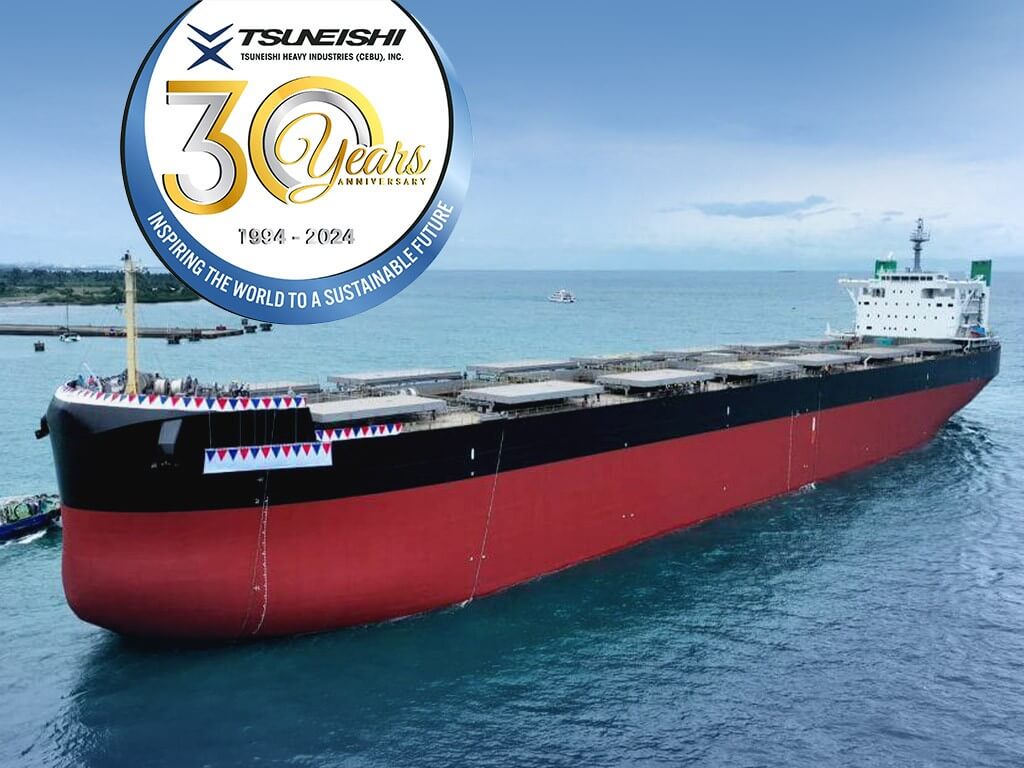
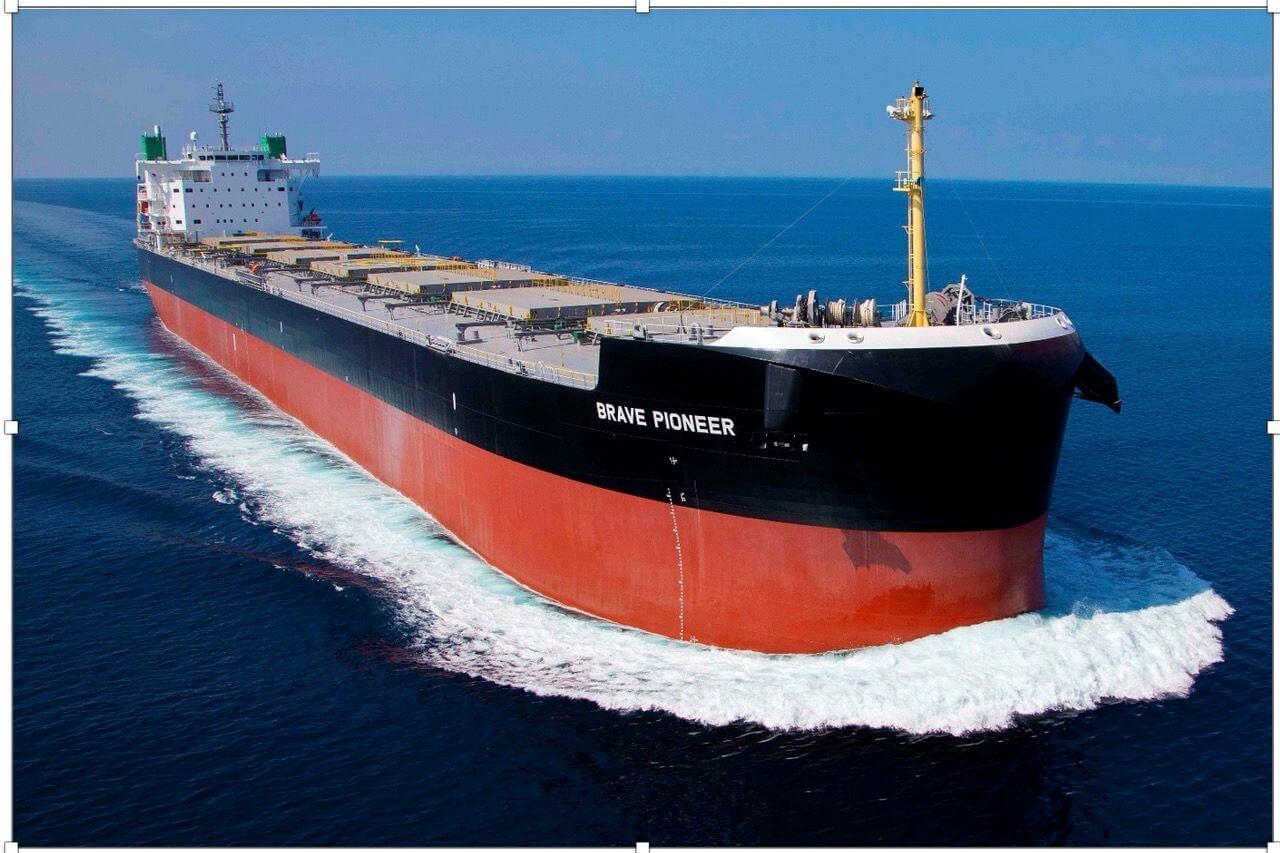
Tsuneishi Heavy Industries Inc. (THI), manufacturing base of Japan-based Tsuneishi Shipbuilding Co. Ltd, successfully delivered the world’s first methanol dual-fueled KAMSARMAX Bulk Carrier on Jan. 15, 2026.
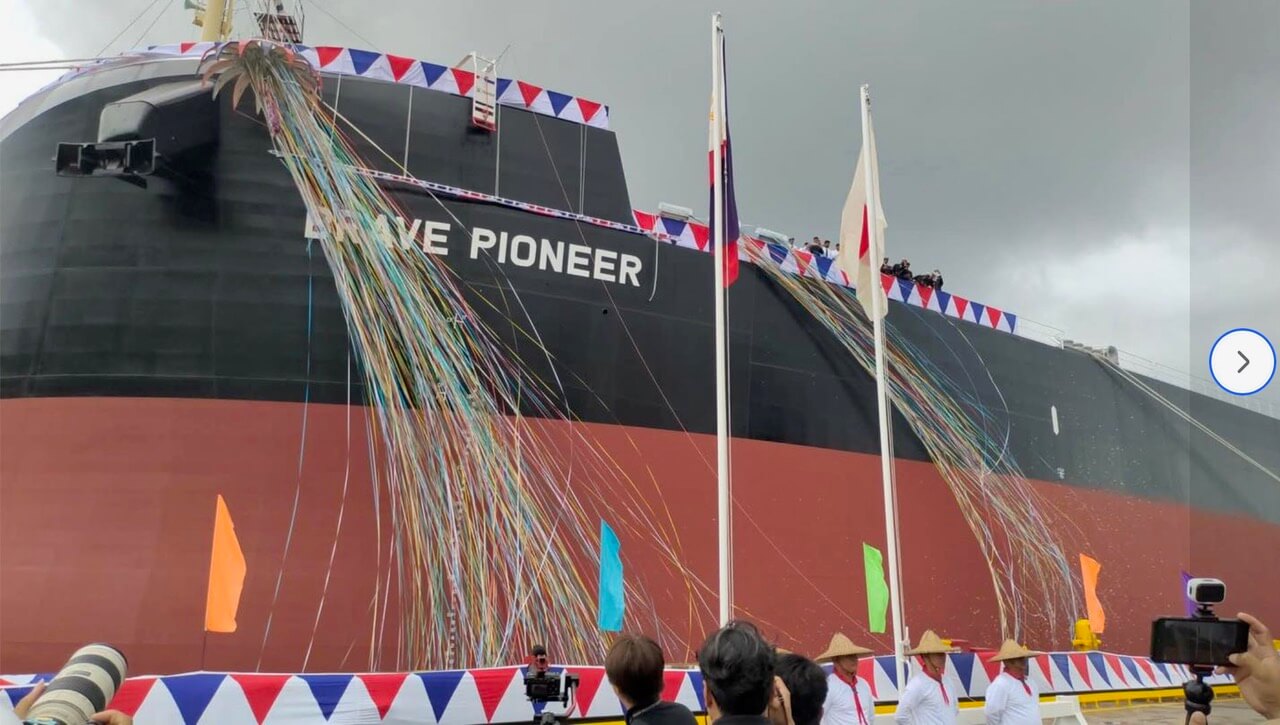
During the ceremony, Marcos named it “Brave Pioneer.”
Green methanol
By adopting methanol as a propulsion fuel, the vessel achieves a reduction of about 10 percent in carbon dioxide (CO2) emissions, 80 percent in nitrogen oxides(NOx), and 99 percent in sulphur oxide (SOx) during operations compared with conventional vessels.
The use of green methanol further enhances the vessel’s potential to reduce environmental impact and promote environmentally responsible shipping.
The vessel, which has a deadweight of 81,200 tonnage, features both a shallow draft and low air draft, enabling access to a wide range of ports worldwide.
Marcos said the KAMSARMAX’s design put the country on the map as a “future-ready maritime manufacturing hub” that was aligned with the International Maritime Organization decarbonization targets and global sustainability standards.
Gaining access to premium markets
Moving the shipping industry toward green technology was important , he said, as global regulations become stricter and demand for low-emission and alternative-fuel vessels continues to grow.
“Philippine shipyards that can deliver these vessels gain access to premium international markets. Green vessels also open doors to sustainability-linked loans, green bonds, and climate finance, bringing new investment into our shipbuilding sector,” he added.
The President said the transition also fueled growth in ancillary industries—advanced marine components, coatings, materials, and energy-efficient systems—strengthening the entire manufacturing ecosystem.
The Philippines is one of the world’s largest shipbuilding nations, with 130 registered shipyards employing more than 11,000 workers, 70 percent of whom are skilled professionals such as welders and fitters.
In 2024, 484 vessels were constructed from fishing boats to passenger and cargo ships, according to Marcos.
At the West Cebu Estate, a 540-hectare PEZA-registered Special Economic Zone in Balamban developed by Aboitiz InfraCapital, Tsuneishi launched over 370 vessels in the more than 30 years of operation. It is known as the shipbuilding capital of the Philippines.
Commitment
Marcos stressed his commitment to strengthen the shipbuilding and ship repair industry by enhancing its competitiveness, sustainability, and strategic capacity.
He cited the Corporate Recovery and Tax Incentives for Enterprises (CREATE) Law which provides fiscal and non-fiscal incentives to encourage modernization, the adoption of low-carbon technologies, and higher-value manufacturing.
“By continuing to invest in green technologies and advanced manufacturing, we are shaping the Philippines into a future-ready maritime hub that can meet the evolving demands of global trade,” he added.

Contributor