The planting activities covered 451 hectares, primarily within the Ipo and La Mesa watersheds, which are vital to the long-term sustainability of Metro Manila’s water supply, Maynilad said in a press statement.
Watershed protection drive
The Ipo and La Mesa watersheds serve as major raw water sources for millions of residents in the Greater Manila Area.
By expanding forest cover in these areas, Maynilad aims to help prevent soil erosion, reduce sedimentation, and enhance water quality.
Beyond new planting initiatives in 2025, the company sustained maintenance and protection work across previously reforested sites.
About 1,295 hectares of areas originally developed between 2022 and 2024 were actively maintained during the year to ensure tree growth and site stability.
Since the launch of the Plant for Life program, Maynilad has planted over 1.64 million trees across around 2,419.88 hectares of watershed land.
High survival rate
Annual assessments conducted by the Department of Environment and Natural Resources Region 3 showed an average tree survival rate of 91 percent in earlier planting sites.
The figure underscores the importance of sustained care beyond initial planting, according to Maynilad officials.
“Planting is only the first step. What matters is sustained site protection so the trees can mature and strengthen the watershed,” said Atty. Roel S. Espiritu, Maynilad chief sustainability officer, in a company statement.
Community partnerships formed
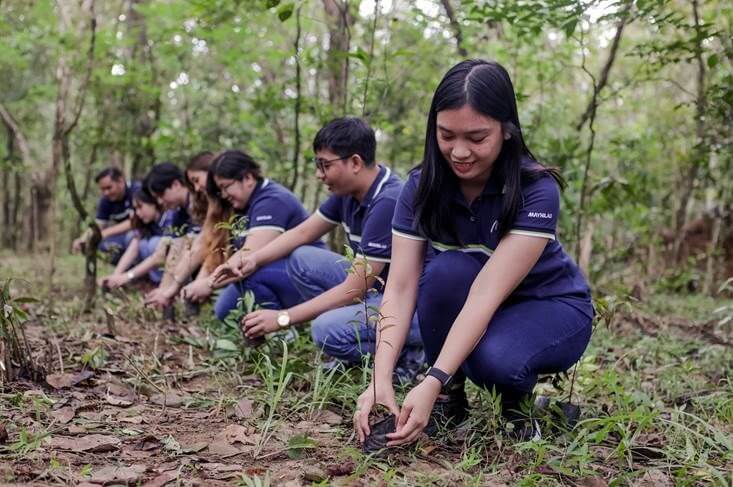
In 2025, Maynilad partnered with two People’s Organizations—the Mt. Balagbag Farmers Association and the Briquettor Association of the Philippines—to implement its reforestation activities. Volunteers from private companies and media groups also took part in tree-planting efforts.
The Plant for Life initiative forms part of Maynilad’s broader watershed protection strategy aimed at safeguarding raw water sources and ensuring a stable supply for communities within its concession area.
Maynilad is the largest private water concessionaire in the Philippines in terms of customer base. It serves the West Zone of the Greater Manila Area under the Metropolitan Waterworks and Sewerage System, covering parts of Manila and Quezon City, several cities in Metro Manila, and selected areas in Cavite Province. —Ed: Corrie S. Narisma