Marie Camille Bondad, general manager of Mont Property Group, said during an April 15 news conference that work on the project will resume gradually, with caution and in close coordination with relevant government agencies.
She added that the company has been working with local government units and barangays to help address flooding concerns in communities located below the development.
“For example, we have been working with Barangay Guadalupe and some homeowners’ associations on de-clogging and clearing operations, while introducing practical improvements to their drainage systems,” she said.

Bondad emphasized that flooding issues cannot be resolved if the root causes are misidentified.
“We recognize the gravity of what affected communities experienced. That is why we are working with the government, the people of Guadalupe, and other stakeholders to contribute to a solution to this system-wide flooding challenge,” she said.
“The communities of Cebu deserve interventions that address the actual drivers of flooding—not misdirected ones.”
Monterrazas has also increased its retention ponds from 18 to 23, with a total capacity of 53,000 cubic meters—about 81 percent more than what its environmental compliance certificate (ECC) requires.
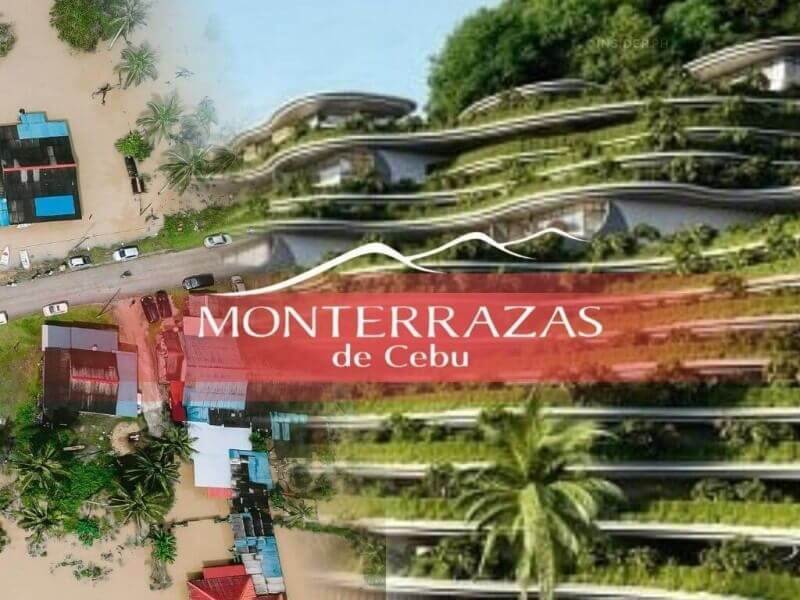
Monterrazas is an expansive, high-end residential development located in the hills of Barangay Guadalupe, Cebu City. Situated about 1,000 feet above sea level, it offers views of Cebu as well as the islands of Bohol and Mactan.
Payment of fine
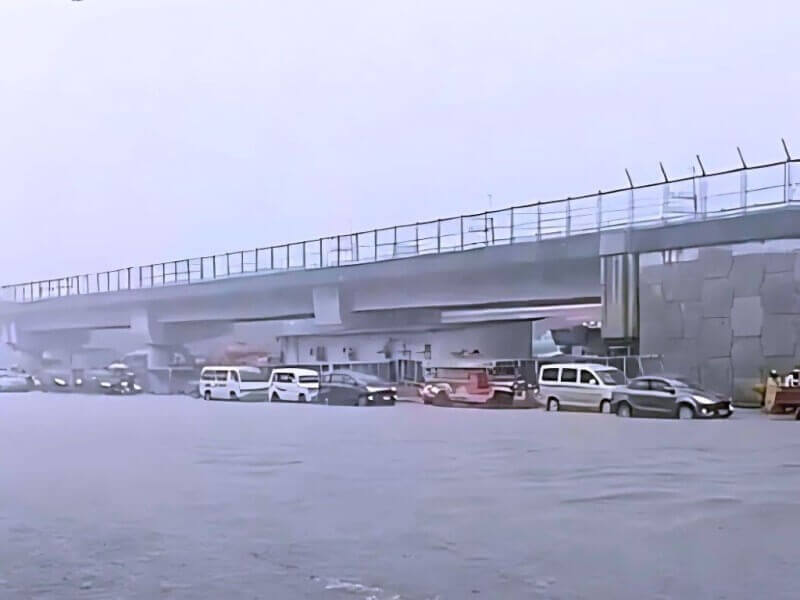
The DENR issued a cease-and-desist order on Nov. 10, 2025, five days after Typhoon “Tino” struck Cebu and flooded parts of Guadalupe and nearby villages—an incident some residents attributed to upland developments.
In an order dated April 6, DENR Director John Edward Ang lifted the stoppage after Monterrazas paid a P400,000 fine on Feb. 16 and fulfilled its commitments made during a Nov. 13 technical conference.
The administrative case against Monterrazas involved alleged violations of Presidential Decree No. 1586 and its Implementing Rules and Regulations, which established the Philippine Environmental Impact Statement (EIS) System. The system requires projects with potential environmental impacts to secure an Environmental Compliance Certificate (ECC).
However, the order lifting the stoppage did not specify the company’s exact violations.
The DENR reminded the developer to strictly comply with the submission of weekly progress reports on site activities and to conduct regular information and education campaigns (IEC) to update stakeholders on the project status and the implementation of its environmental management plan.
UP study
During the news conference, Bondad disputed allegations that the development contributed to flooding in Barangay Cotcot in Liloan and in communities along the Mananga River in Talisay City during Typhoon “Tino.”
She cited a hydrological study conducted by the University of the Philippines Institute of Environmental Science and Meteorology covering the Guadalupe and Kinalumsan river basins.
The study found that Monterrazas de Cebu did not worsen flooding within its watersheds. Instead, its upstream detention ponds helped regulate water flow by slowing and delaying peak runoff, even during extreme rainfall.
“The study concluded that the presence of the Monterrazas de Cebu development, with its detention pond system in place, actually reduced water runoff compared to a scenario where the site had no development and no ponds,” Bondad said.
“If those detention ponds had not been built, the risk of flash flooding flowing off the site would have been greater,” she added.
The study also found that Typhoon “Tino” brought extreme rainfall—428 millimeters in just 24 hours—similar to Metro Manila’s experience during Typhoon “Ondoy” in 2009, one of the worst flooding events in the country’s history.
Flooding during “Tino” severely affected Cotcot and Mananga, which are located several kilometers away from Monterrazas and have separate drainage systems and hydraulic conditions.
Monterrazas de Cebu sits within the Guadalupe and Kinalumsan watershed and does not drain into Cotcot, Mananga, or other affected areas.
Detention ponds worked
During Typhoon “Tino,” Bondad said Monterrazas had 18 detention ponds with a combined capacity nearly double that specified in its ECC. These were designed to capture rainwater and release it gradually, rather than allowing it to rush downhill.
“The UP study found that these ponds reduced the risk of flash flooding off our site by up to 100 percent, with an average reduction of approximately 78 percent. They captured up to 99.74 percent of excess rainwater generated within our site during the typhoon,” she said.
Engr. Ranel Pelpinosas, Mont Property’s construction head, said five more detention ponds were added, bringing the total to 23—about 81 percent more than required under the ECC.
He added that the company would continue assessing, in coordination with government agencies and consultants, whether additional ponds are needed.
For now, he said construction will resume following the lifting of the stoppage order and submission of all required documents. —Ed: Corrie S. Narisma

Contributor