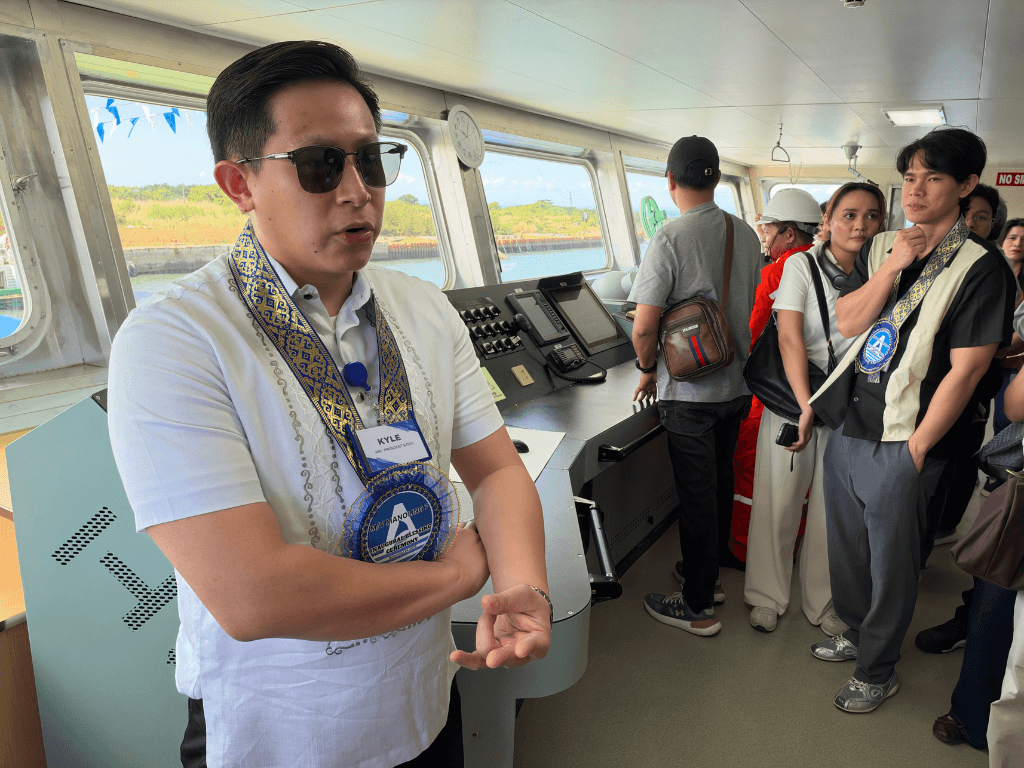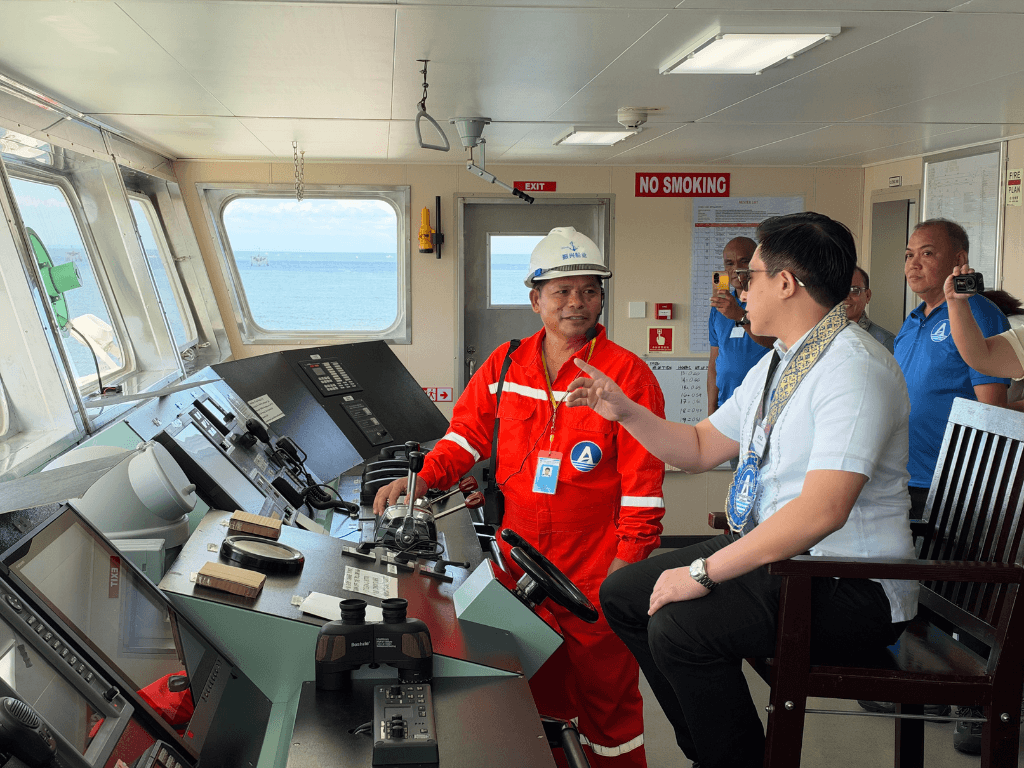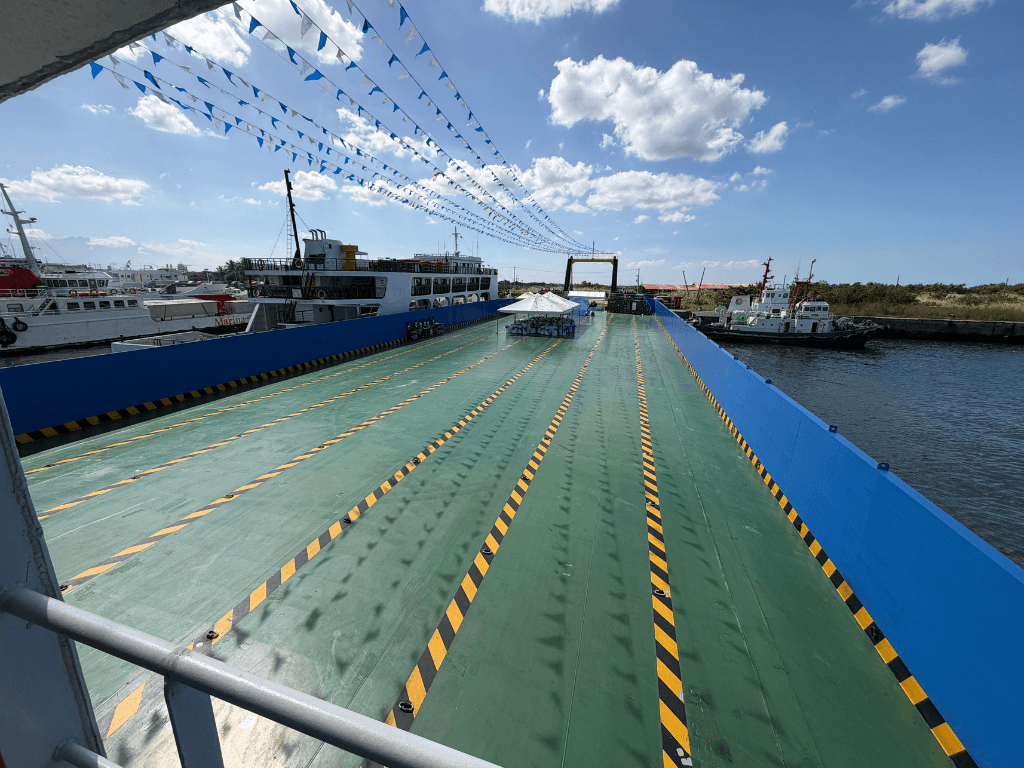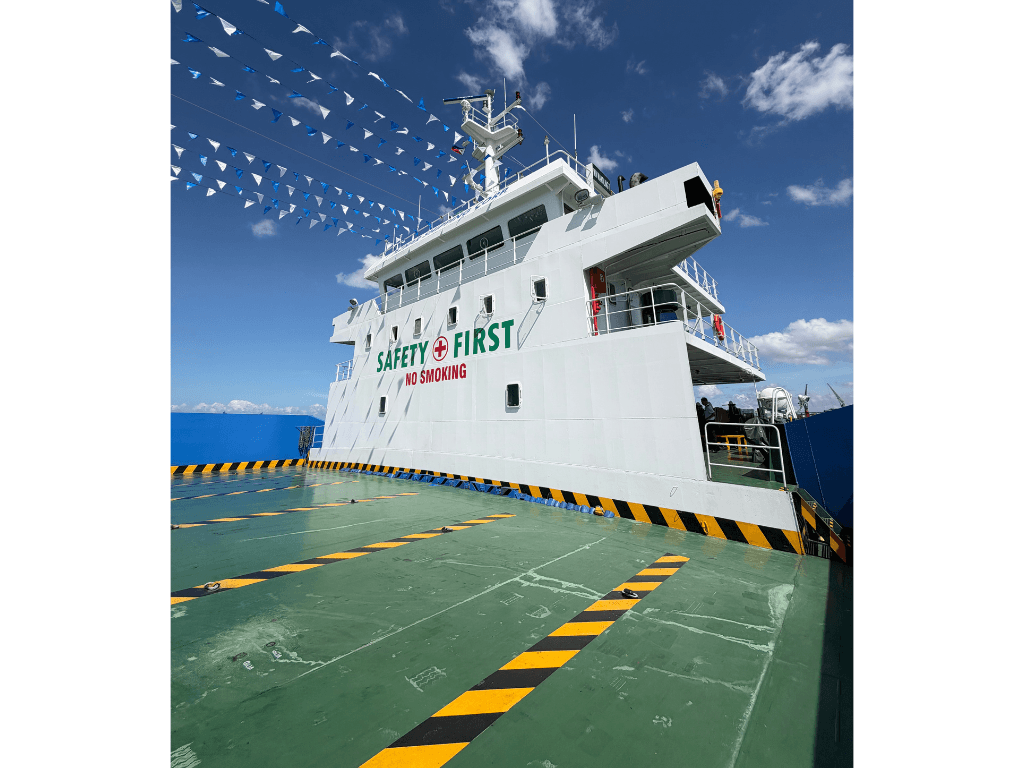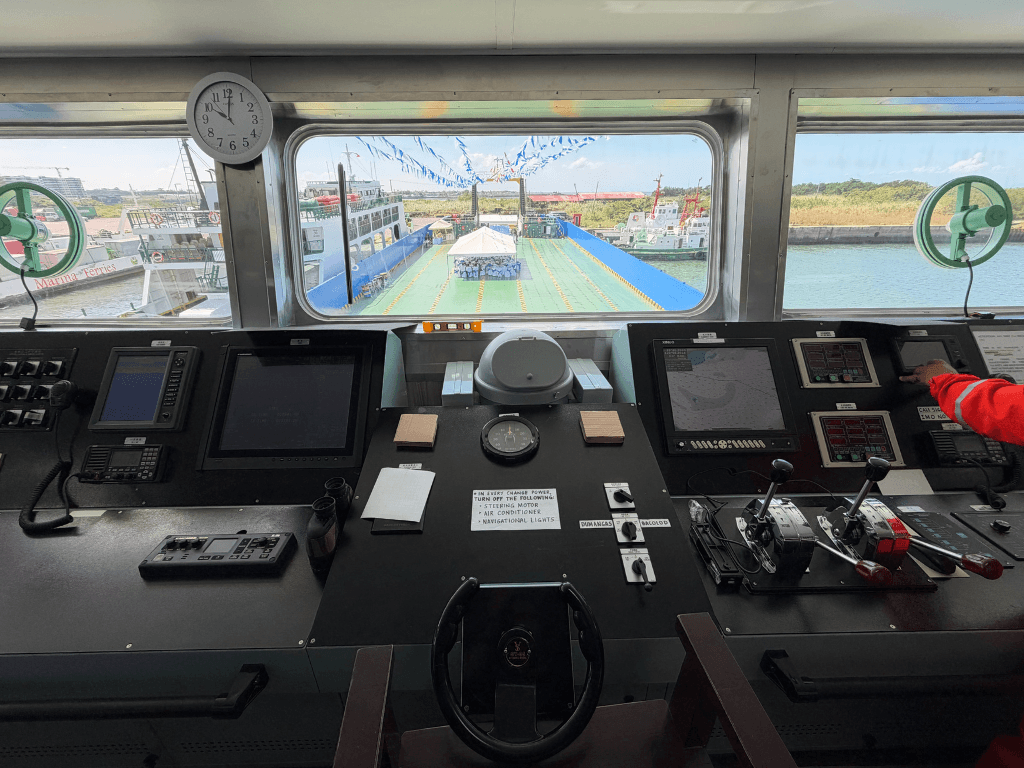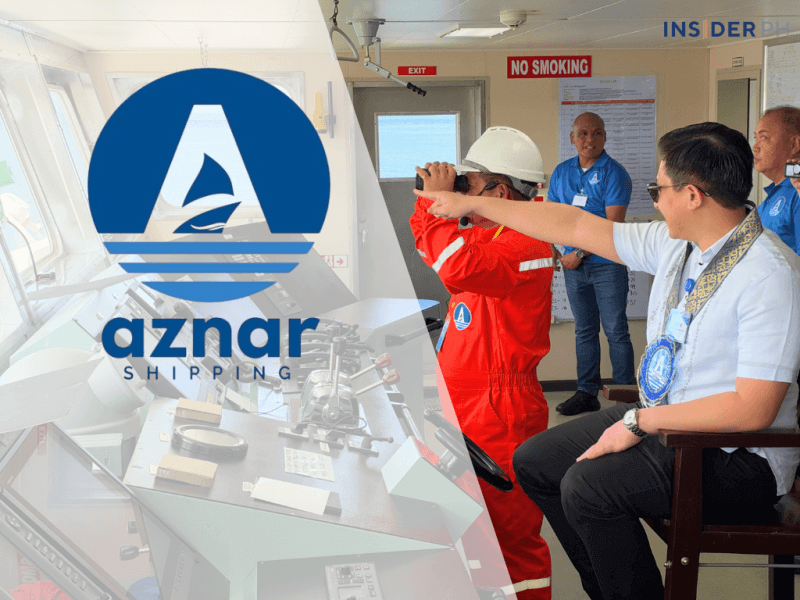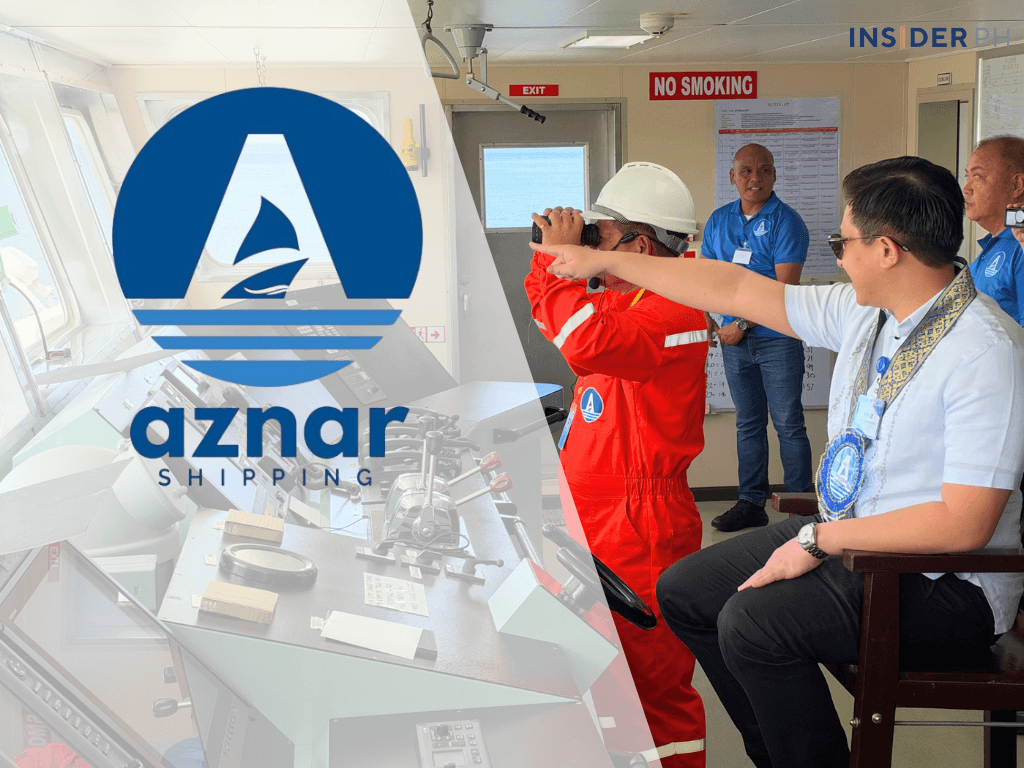
That’s what Kyle Alexander Aznar had on when we met aboard the Manoling 7, the newest ship in the fleet of Cebu-based Aznar Shipping Corp.
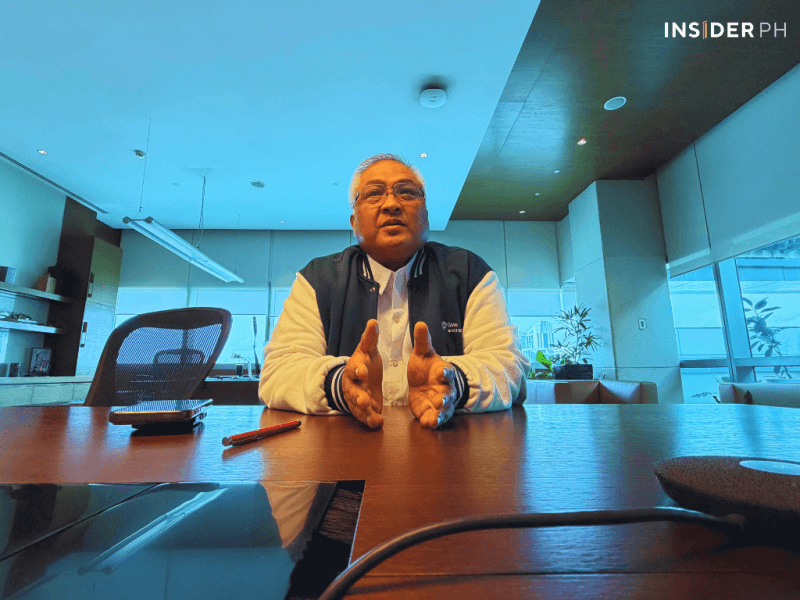
Kyle is only 31. Four years ago, his father, Alexander, passed away suddenly, dropping him straight into the pilot house of the family shipping business that’s been operating for over three decades. Now he’s prepping an IPO.
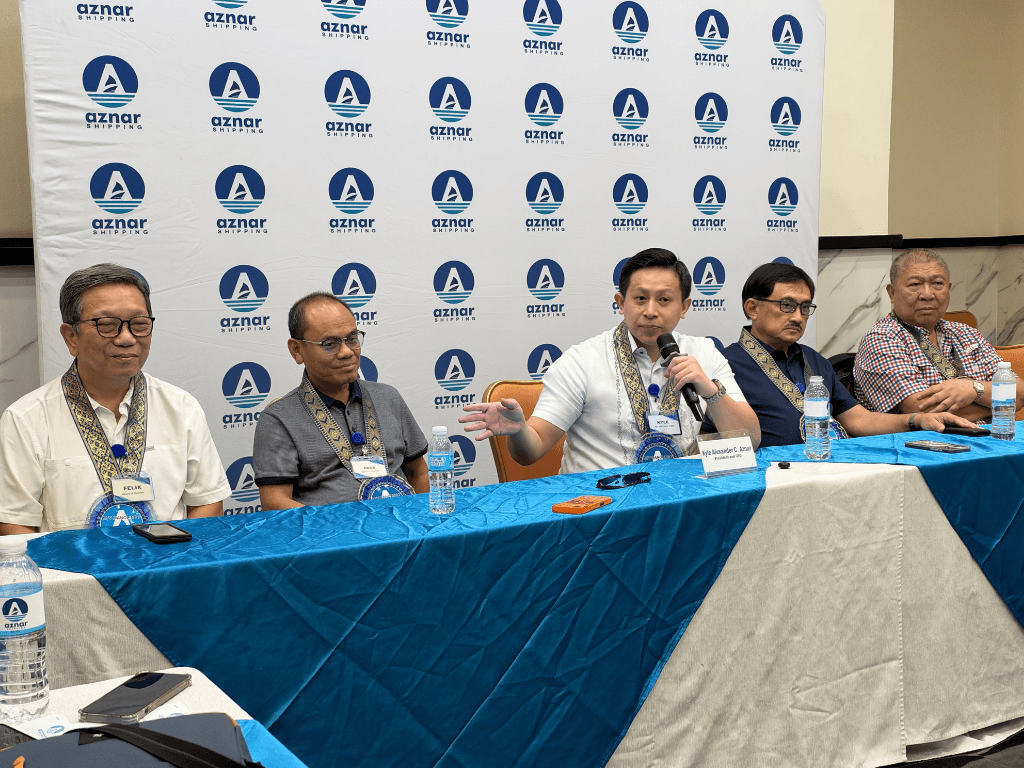
We started the morning on the ship’s bridge among the radars and throttles, then moved to the function room of a nearby Chinese restaurant. Four veteran company directors sat right beside him at the table. None of them said a word during the Q&A. Kyle fielded every single question—from vessel unit economics and port bottlenecks to the upcoming stock market listing—on his own.
Breaking the third-generation curse
You see this movie a lot in Philippine business, and it rarely ends well. Usually, the founder grinds it out, the second generation scales it up, and by the time the third generation shows up, everyone is coasting on the surname until the margins evaporate.
Kyle seems acutely aware of that trap.
His grandfather, Manoling—the guy the new boat is named after—only got into inter-island shipping in the 1990s because coal mining had gotten too crowded. He literally converted his coal barges into ferries. "I'm just standing on the shoulders of giants," Kyle told me when I asked about the ship's name.
Respecting the history is easy. Putting real guardrails against nepotism is harder. According to Kyle, their family constitution forces relatives to go through the exact same hiring gauntlet as outsiders. No pedigree passes.
Better yet, he told us straight up that if no Aznar is qualified to run the shop down the road, he has zero issue handing the keys to outside professional managers.
For a relatively young heir, that’s a remarkably unsentimental take. If you’re an institutional investor looking at a family-owned small cap, it’s practically music to your ears.
The math behind bigger boats
Of course, good governance doesn't move freight across the Visayas. Right now, Kyle’s actual day job is figuring out how to haul more cargo through Philippine ports that are bursting at the seams.
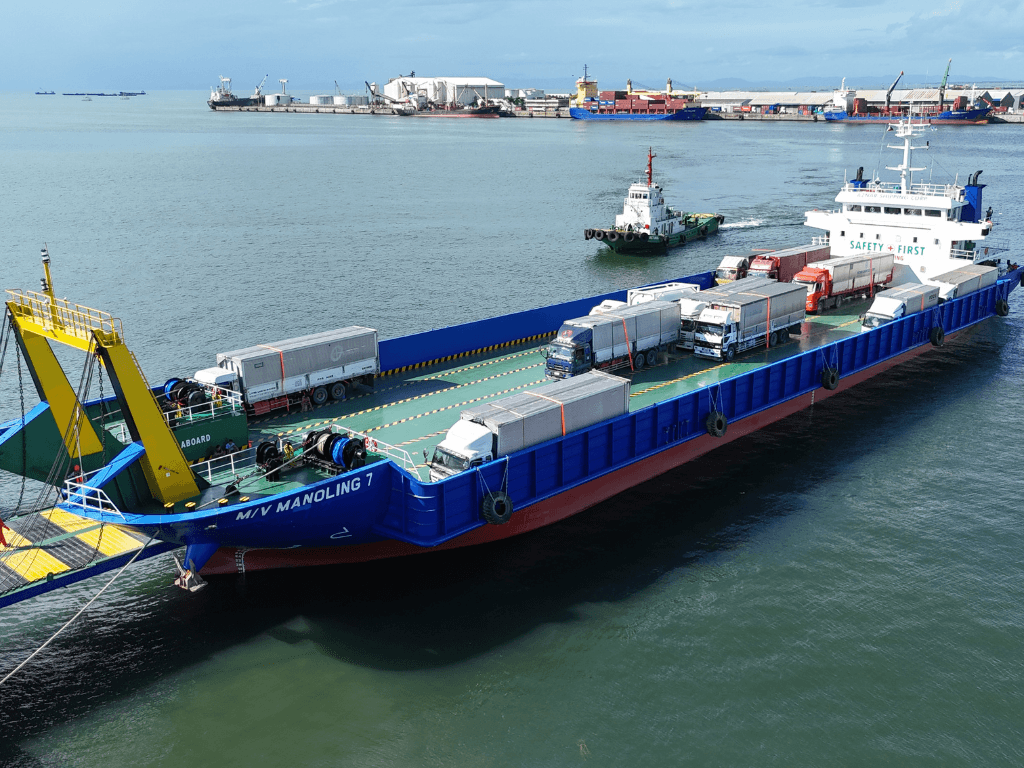
Enter the Manoling 7. Fresh out of a Chinese shipyard, it fits 30 to 35 ten-wheeler trucks. They launched it in October on the Bredco (Bacolod) to Dumangas (Iloilo) run, tying together their Cebu-Negros-Panay loop. A few weeks in, utilization is already flirting with their 80-percent target.
The cargo itself isn't sexy, which is why it makes money. We're talking agricultural goods, fuel, cement, basic consumer staples. People might delay buying a new phone when inflation bites, but they still eat, and provinces still pour concrete. That resilience is why Aznar Shipping more than doubled its bottom line in the first half of 2026, pulling in roughly P51 million in net income.
Where Kyle really lights up, though, is on vessel economics.
A bigger Ro-Ro hauls three or four times the payload of a smaller boat, yet your operating expenses barely budge. You still need roughly the same crew size. Fuel burn doesn't scale linearly with tonnage. Your unit cost drops, and your margins actually survive fuel spikes.
You can buy a ship, not a port
There’s a second, much more pragmatic reason to go big: Philippine ports are a mess.
Anyone who deals with inter-island logistics knows infrastructure hasn't kept up with trade volume. Trucks sit waiting; boats sit waiting. Kyle’s workaround is simple. Instead of docking multiple small ferries and burning separate berthing and loading cycles, you bring in one large vessel and clear the yard in a single shot.
I threw out an analogy over lunch: it’s the exact same logic behind kicking turboprops out of NAIA. When runway slots are scarce, wasting one on a tiny plane makes zero economic sense.
Kyle agreed immediately. He gets it. Still, it highlights a hard ceiling for every logistics operator in the country. Private companies can borrow money and buy shiny new Chinese steel all day long, but they can't pour concrete for public ports. Until government infrastructure catches up, operators are just optimizing around a bottleneck.
An IPO as an accelerator, not a lifeline
To pay for this fleet upgrade, Aznar Shipping is targeting a December 18 market debut, assuming regulators sign off on time.
At the ceiling of their P0.67 per share indicative price, the primary offer raises up to P670 million. Most of that buys two more vessels. Roughly P90 million, however, is earmarked for developing their own shipyard.
Honestly, the shipyard might be the smartest—and riskiest—part of the pitch.
Local maritime rules force vessels into dry-dock every 30 months. When you rely on third-party yards, you’re stuck waiting on their schedule and eating whatever surprise costs come with the downtime. Owning the yard lets Aznar control its own maintenance destiny. The catch? Building and running a capital-intensive shipyard is a completely different beast from running ferries. Managing both at once will test their bandwidth.
What if the market sours and the IPO gets pushed back? Kyle didn't flinch. "We can't stop growing now," he said."Once you stop growing, you start dying."The listing is supposed to hit the gas, not start the engine. Investors like hearing that a company doesn't desperately need their cash just to survive.
Trading privacy for scrutiny
Before we wrapped up, Kyle went around the table and introduced the four directors sitting with him—the veterans overseeing everything from financial reporting and governance to the IPO mechanics and long-term strategy. He cracked a joke about being just the "face" of the business.
He’s selling himself short, obviously, though he’s smart enough to know what he doesn't know.
Taking a closely held family firm public means trading quiet autonomy for quarterly scrutiny from shareholders who don't care about your last name. Walking off the Manoling 7 that morning, the setup was clear. Kyle has the new hardware, and he’s surrounded himself with gray hair in the boardroom.
Now comes the hard part: building a shipping company sturdy enough that, someday, it won't need an Aznar at the helm at all.
— Edited by Daxim L. Lucas