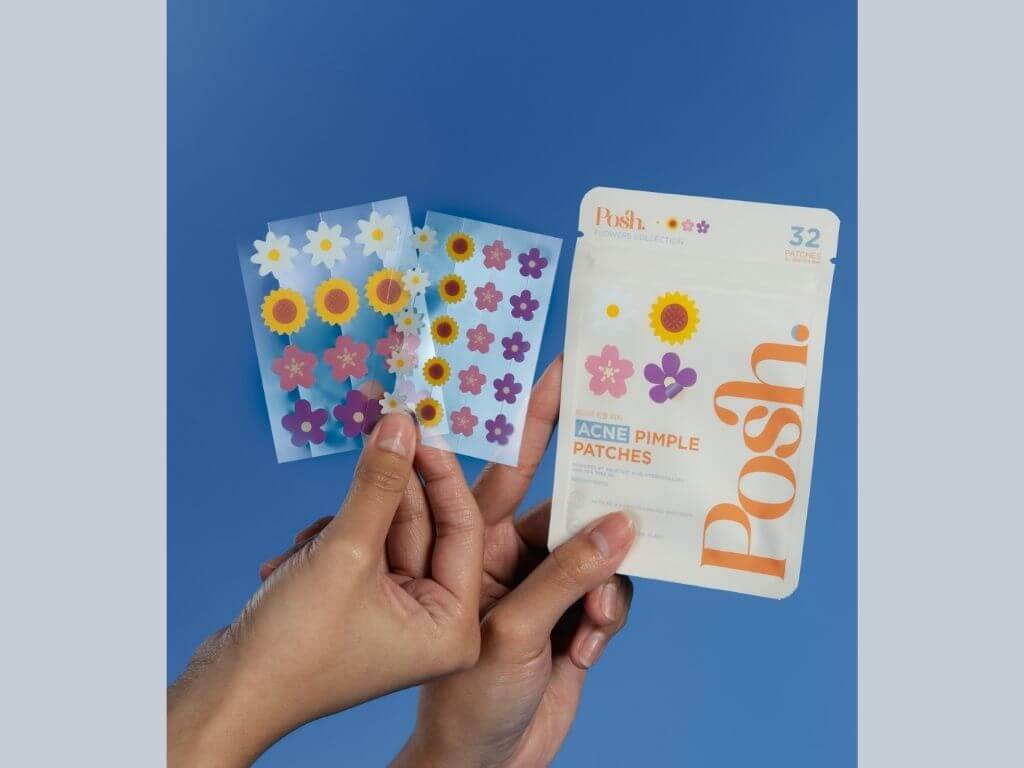
The brand turned pimple patches into something consumers could wear openly. Backing aesthetics with performance and mass distribution, Posh Skin scaled quickly across online and retail channels.
Social-first era
In November 2024, Posh Skin Co. founders Dowan Kim and Charmaine Grace Palermo identified a shift in how consumers buy skincare products, with Gen Z primarily relying on TikTok and other social media platforms.

Their goal was to create a brand designed for a social media-first era using data-led product development and omnichannel distribution.
“Today, we know that TikTok is extremely popular … We want to start a company to create brands that really resonate in this new era,” Kim said in an interview with InsiderPH.
The company positioned Posh Skin as a stylish pimple patch, entering a segment where many options are marketed as transparent and discreet.
The brand encourages younger consumers to view acne care as something they can style rather than hide.
The goal, they said, was to reduce the stigma often associated with breakouts.
“Instead of covering your pimples and hiding them, what if you have fun with it and style your personality so that you don't need to be embarrassed about having a pimple?” Palermo said.
‘First principles’ approach
While leaning into playful designs, the brand also prioritized performance and formulation.
Posh Skin took a “first principles” approach by closely evaluating existing products in the market before finalizing its ingredients and formulating them specifically for tropical climates.
While the brand is Filipino at heart, it is formulated in South Korea by Kimtan Labs. The product uses hydrocolloid and salicylic acid, which are common active components in pimple patches.
To differentiate it, the founders added tea tree oil, which is more commonly found in international offerings.
“We wanted to deliver a superior product at a great value [that can be] distributed at scale,” added Kim, a Korean-American who previously held senior roles in Google and Tiktok.
He added that Posh Skin is designed to work within six to eight hours while remaining affordable.
The strategy appears to be working with demand for its pimple patches growing quickly since its launch. This growth is supported by both online sales and physical distribution.
“Today, we're selling one pimple patch every 30 seconds, and that number continues to grow,” Kim said, adding that it now has a wider retail footprint in the region. “We're sold in over 10,000 retail outlets across Singapore and the Philippines,” he adds.
Wider brand traction
The brand gained traction after a TikTok breakthrough when popular Gen Z influencer Niana Guerrero used the patch organically and sparked interest in Posh Skin. She later became the brand’s first ambassador.
The name “Posh Skin” was chosen to convey a premium quality that remains accessible to its target market of 14- to 28-year-olds, a segment that is highly active online and often seeking acne solutions.
Kim said social media remains the key discovery channel for online products, but added that omnichannel availability can also drive in-store purchases.
Beyond pimple patches
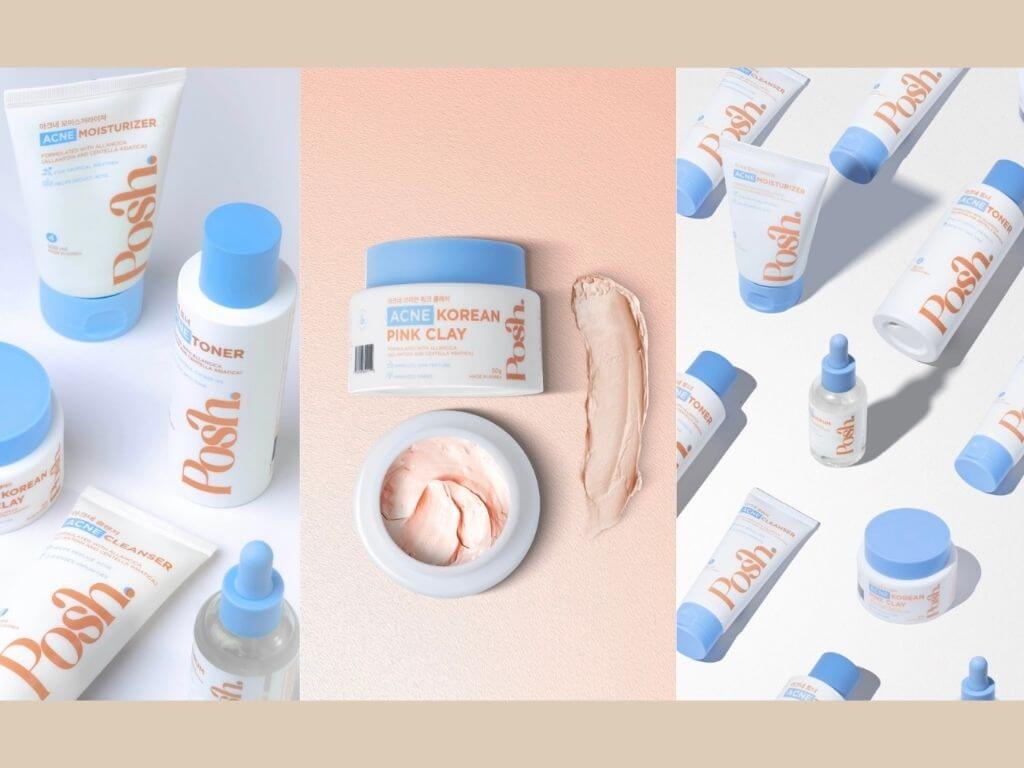
Posh Skin is expanding beyond pimple patches into a broader acne-focused skincare routine, including a cleanser, toner, serum, moisturizer and clay mask.
The brand also plans to introduce additional products such as sunscreen that address different stages of acne care, from treatment to aftercare.
In December last year, Posh Skin entered the Singapore market through an exclusive partnership with 7-Eleven, marking its second market in the region. Kim said the brand has since received its first repeat order from 7-Eleven Singapore.
Affordability, operational efficiencies
Despite perceptions that beauty products are high-margin, the company said cost management remains a key part of sustaining competitive pricing.
“One of the misconceptions that I had going into this business was that skincare was high margin, and I can actively share with you that it is most certainly not,” he stressed.
He attributed affordability to scale, supply chain decisions and operational efficiencies, including packaging choices and distribution partnerships.
The brand also takes a more sustainable approach to packaging, using materials that reduce plastic and paper use by up to 85 percent.
Kim said the 13-month-old brand is run by a “small but mighty team” of 10 full-time employees based in its new office in Bonifacio Global City.
‘Fail fast, fail forward’
He added that his key takeaway from entrepreneurship is that “one must fail fast. Fail forward,” noting that the market can change overnight and startups need to move quickly, test ideas and avoid repeating mistakes.
The company has signaled plans to expand to Malaysia, Thailand, Hong Kong, Dubai, and East Africa in the future.

Content Producer