
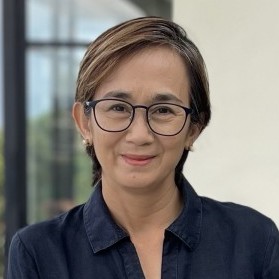
For Hermione Abadia, performing with the University of San Carlos dance group helped her through her first flight attendant interview. Years later, she would draw on what she learned in aviation to open a cabin crew training center in Cebu.
During the interview, she decided to treat the recruiters as she would an audience when she performed with her group: smile, connect with them and draw them into the conversation. It worked. She got the job.

Abadia shared her experience with aviation students at the 4th Cebu Aviation Summit on Sept. 25, encouraging them to value what they learn outside the classroom, whether through a dance group, choir, student organization or athletic team.
“At that time, you might think this is just something I do outside my classes. But you're actually building skills. You're learning how to communicate, how to work with a team, how to perform under pressure, how to speak in front of people, how to deal with different personalities and how to become confident. And sometimes those are exactly the skills an employer is looking for,” she said.
In her case, she added, those skills helped her take the first step toward her destination.
Aviation inspired name
Abadia is managing director of RWY 22 Cabin Crew Training Center, which she established in January 2019 after spending about 15 years in aviation as a cabin crew member and later as a safety instructor.
The center’s name comes from aviation terminology: “RWY” is short for runway, while 22 was a runway designation at Mactan-Cebu International Airport.
“Over the years, I realized that the name means more than just a runway number,” Abadia said.
“Our runway is where an aircraft prepares to leave the ground. It is where you build momentum. It is where you prepare and eventually you take off. And that became the philosophy behind Runway 22. We are not the destination. We are the runway. We help prepare you for takeoff,” she said.
Abadia’s first job was as a call center agent at age 21. She said she took the job to gain experience and improve her communication skills rather than to pursue a career in the business process outsourcing industry.
When she later called Philippine Airlines to inquire about job openings, however, her hands shook and her mind went blank. She recalled asking the person on the other end of the line, “May hiring po kayo?” (Are you hiring?)
There was no introduction or standard greeting, she said.
“Yes. Come here tomorrow,” came the reply.
At the PAL office, Abadia felt underdressed in her knitted blouse and black slacks as she stood among applicants in more polished attire and carefully applied makeup.
She pushed aside her insecurity and drew on her experience with the USC dance group, treating the recruiters as she would an audience.
“I treated those recruiters as my audience. I smiled. I engaged with them. I tried to make them feel that I was genuinely happy to be there. And luckily it worked,” she said.
Life changing
Abadia spent three years with PAL before joining Etihad Airways, where, she said, she was among the first 50 Filipinos hired by the airline. Working alongside colleagues of different nationalities, cultures and backgrounds broadened her experience.
At 32, she was promoted to lead flight attendant. Three months later, she was encouraged to apply for a position as a crew safety instructor, a move she said changed the course of her career.
“Suddenly, I wasn't only responsible for myself. I had to teach other people,” Abadia said. “When you are a cabin crew member, you need to know your job. But when you're an instructor, you need to know more than what your trainees know. You need to understand the subject beyond the textbook. You need to know the why.”
She grew to love training others and eventually returned to Cebu to establish her own training center.
Abadia said she started RWY 22 with little more than tables, chairs and the skills and experience she had gained in aviation.
She gradually invested in equipment and aircraft cabin mock-ups, giving students a setting where they could practice, make mistakes safely and better understand the responsibilities of cabin crew before working aboard an aircraft.
Prepare, learn
She told students that each stage of her career had helped prepare her for the next, even when she could not yet see where it would lead.
“Your current job may be preparing you for your future career. Your current course may be teaching you skills you don't realize you need. Your current struggle may be building the person you will eventually become. Aviation taught me that knowledge has no finish line,” Abadia said.
She urged aspiring aviation professionals to prepare before opportunities arise, treat rejection as a reason to improve and try again, and not be afraid to start small. She also reminded students that aviation demands teamwork, adaptability and a sense of responsibility.
“So, to every student here today, dream big, prepare seriously, stay humble, keep learning, and don't be afraid to start small. My own journey started small. You don't always know where your first step will take you, but you have to take it,” Abadia said. —Ed: Corrie S. Narisma
Contributor