Insider Spotlight
The consumer goods company said its operational initiatives have already reduced Scope 1 and 2 greenhouse gas emissions by 77 percent as of end-2025 against its 2015 baseline. Its science-based target calls for a 100 percent reduction in absolute Scope 1 and 2 emissions by 2030.
Sustainable business practices
The Philippines is highly exposed to climate risks, making corporate efforts to cut emissions and strengthen supply-chain resilience increasingly important.
For Unilever, climate action is also tied to managing business risks, improving operational efficiency and reducing exposure to energy-market volatility.
Unilever Philippines shifted to 100 percent renewable grid electricity using geothermal energy in 2019 and has since installed rooftop solar panels across facilities. It is also electrifying some thermal processes with technologies including heat pumps and boilers and plans to transition its owned fleet to 100 percent hybrid electric vehicles by 2030.
Supplier climate program
The company is targeting value-chain emissions through Unilever's global Supplier Climate Programme, which gives priority suppliers tools and resources to measure, report and eventually reduce their greenhouse gas emissions.
In September 2025, Unilever Philippines also renewed and expanded its partnership with First Gen to supply renewable energy to priority sites and suppliers across Metro Manila, Cavite, Laguna and Batangas.
Strategy into action
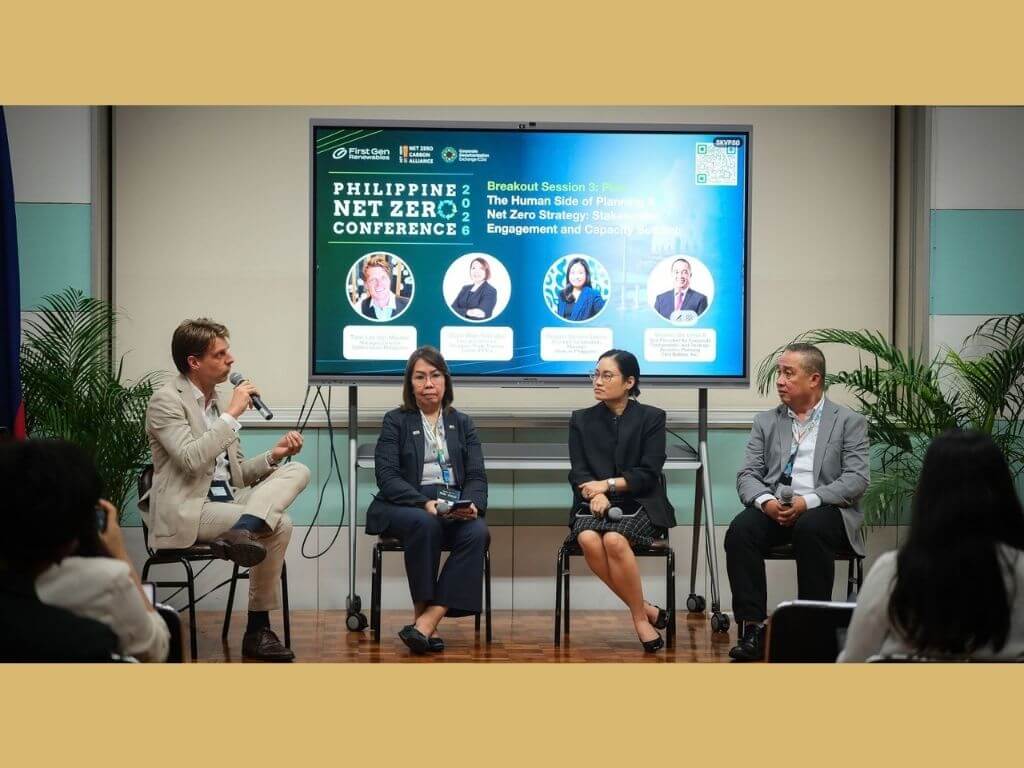
Unilever Philippines is an inaugural member of the Net Zero Carbon Alliance (NZCA). At the NZCA Philippine Net Zero Conference 2026, the company also received a Bronze Award for its decarbonization efforts, data transparency and reporting, and alignment with the alliance's net-zero framework, as shown in the photo on page three of the release.
“Sustainability has to be embedded across the business, with clear ownership and accountability from the functions that can turn strategy into action,” Unilever Philippines sustainability manager Regina Unson-Silerio said in a press statement.“Whether it is about renewable energy, lower-carbon materials and ingredients, logistics improvements, supplier decisions, capital investments, or product specifications, these decisions shape how we operate, innovate, and grow the business,” Unson-Silerio said. —Vanessa Hidalgo | Ed: Corrie S. Narisma