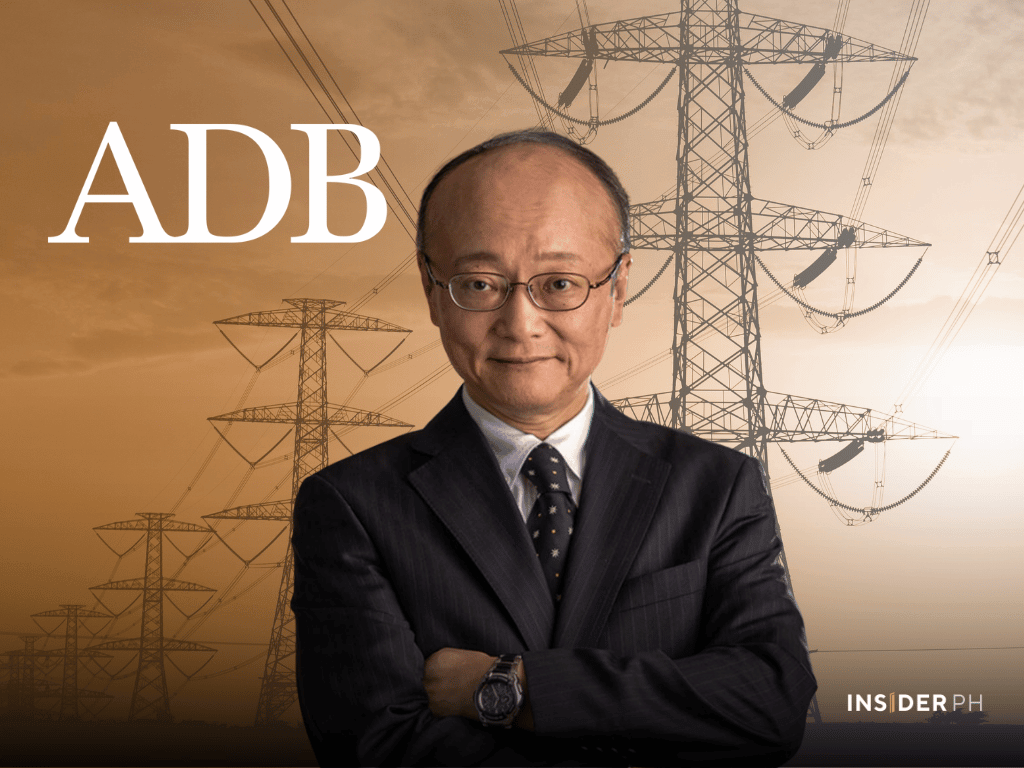
ADB President Masato Kanda said the twin push reflects the region’s most pressing needs.
“Energy and digital access will define the region’s future,” Kanda said in a statement. “By linking power grids and digital networks across borders, we can lower costs, expand opportunity, and bring reliable power and digital access to hundreds of millions of people.”
Power push
At the core of the plan is the Pan-Asia Power Grid Initiative, which seeks to connect national and subregional power systems so renewable energy can flow across borders.
ADB aims to provide $50 billion by 2035 for cross-border power infrastructure, working with governments, utilities, and private sector partners.
Investments will focus on transmission and grid integration, including cross-border lines, substations, storage, and grid digitalization.
The initiative will also support power generation tied to electricity trade, such as renewable energy export projects, regional hubs, and hybrid generation-storage facilities.
By 2035, ADB targets integrating around 20 gigawatts of renewable energy across borders and building 22,000 circuit-kilometers of transmission lines. It also aims to improve energy access for 200 million people, create about 840,000 jobs, and cut regional power sector emissions by 15 percent.
ADB expects to finance about half of the $50-billion program, with the rest coming from cofinancing, including private capital. Technical assistance of up to $10 million will support regulatory alignment, common standards, and project preparation.
Regional shift
The power grid plan marks a shift from bilateral energy links toward a more integrated regional market.
It builds on existing cooperation platforms such as the ASEAN Power Grid, the South Asia Subregional Economic Cooperation program, and the Central Asia Regional Economic Cooperation Energy Strategy 2030.
Digital drive
Alongside energy, ADB is launching the Asia-Pacific Digital Highway, which will mobilize $20 billion by 2035 to expand digital infrastructure and support AI-driven growth.
The initiative will invest in fiber networks, subsea cables, satellite systems, and regional data centers to improve connectivity across the region. It will also provide policy and regulatory support, including cybersecurity frameworks, and fund skills programs to boost digital readiness.
By 2035, ADB aims to provide first-time broadband access to 200 million people and improve connectivity for another 450 million. It also expects to cut internet costs in remote and landlocked areas by about 40% and help create 4 million jobs.
ADB plans to finance $15 billion of the initiative, with $5 billion from cofinancing. A new Center for AI Innovation and Development in Seoul—supported by $20 million from South Korea—will promote responsible AI adoption and train around 3 million people in digital skills.
Growth engine
Together, the two initiatives underscore ADB’s strategy to drive sustainable and inclusive growth by building regional infrastructure that supports both energy transition and digital transformation.
Founded in 1966, ADB is owned by 69 members and remains a key financier of development projects across Asia and the Pacific. —Ed: Corrie S. Narisma