The Marine Ecosystems for Blue Economy Development Program (Subprogram 1) aims to boost the productivity and diversity of the country’s ocean-based industries, while improving the health and climate resilience of coastal communities.
The program also seeks to enhance the plastic and solid waste management value chain and expand investments in the country’s natural capital—measures crucial to ensuring long-term ecological stability and economic competitiveness.
Strengthening the blue economy
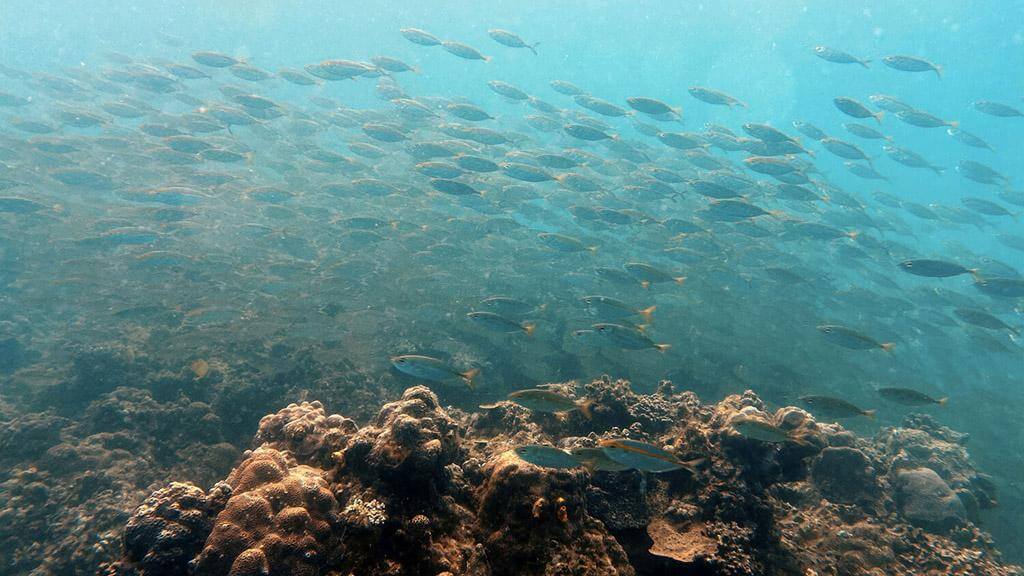
“More than half of the Philippine population is dependent on the country’s oceans and rich marine biodiversity for food and livelihoods, with the blue economy having great potential to be central to attaining inclusive, resilient, and low-carbon development,” said ADB Philippines country director Andrew Jeffries.
“This is ADB’s first extensive cross-sector program focused on fostering national blue economy development in the region. We are committed to assisting our host country in achieving its climate resilience and low-carbon objectives,” he added.
The blue economy—comprising fisheries, tourism, marine manufacturing, shipping, and offshore energy—plays an increasingly vital role in national development.
In 2024, the sector contributed P1.01 trillion ($17.17 billion) to the economy, representing 3.8 percent of gross domestic product.
However, the country’s marine ecosystems face intensifying threats from overexploitation, pollution, and extreme climate events.
Plastic leakage and inadequate waste management continue to degrade waterways, while the Philippines, the world’s second-largest archipelagic nation, experiences up to 20 typhoons each year.
In November, two strong cyclones struck within a week, resulting in heavy casualties and millions in property losses due to storm surges and flooding.
National climate and development priorities
The ADB program is aligned with the Philippine Development Plan 2023–2028, the National Adaptation Plan 2023–2050, and the country’s internationally committed climate targets.
It supports nature-based solutions, climate-resilient livelihoods, and blue carbon ecosystems such as mangroves and seagrasses, which absorb carbon and protect coastal areas.
The initiative builds on ADB’s long-standing support for natural resources management in the Philippines and Southeast Asia, including watershed rehabilitation, coastal community development, and marine plastic pollution mitigation.
It also complements the bank’s Climate Change Action Program, its first climate policy-based loan in the region, and aligns with the Philippines Flyway Project, which aims to sustainably manage key wetlands in Luzon and Mindanao to enhance biodiversity and expand livelihood opportunities.
Co-financing strengthens program reach
The program is further supported by cofinancing from Agence Française de Développement and Germany’s KfW Development Bank, which will each provide up to €200 million (around $235 million) for Subprogram 1. —Ed: Corrie S. Narisma