Environment Secretary Juan Miguel “Mitch” Cuna called for urgent, rights-based international action on climate displacement, saying countries must give communities the means to remain safely where they live while creating dignified pathways for relocation when staying is no longer viable.
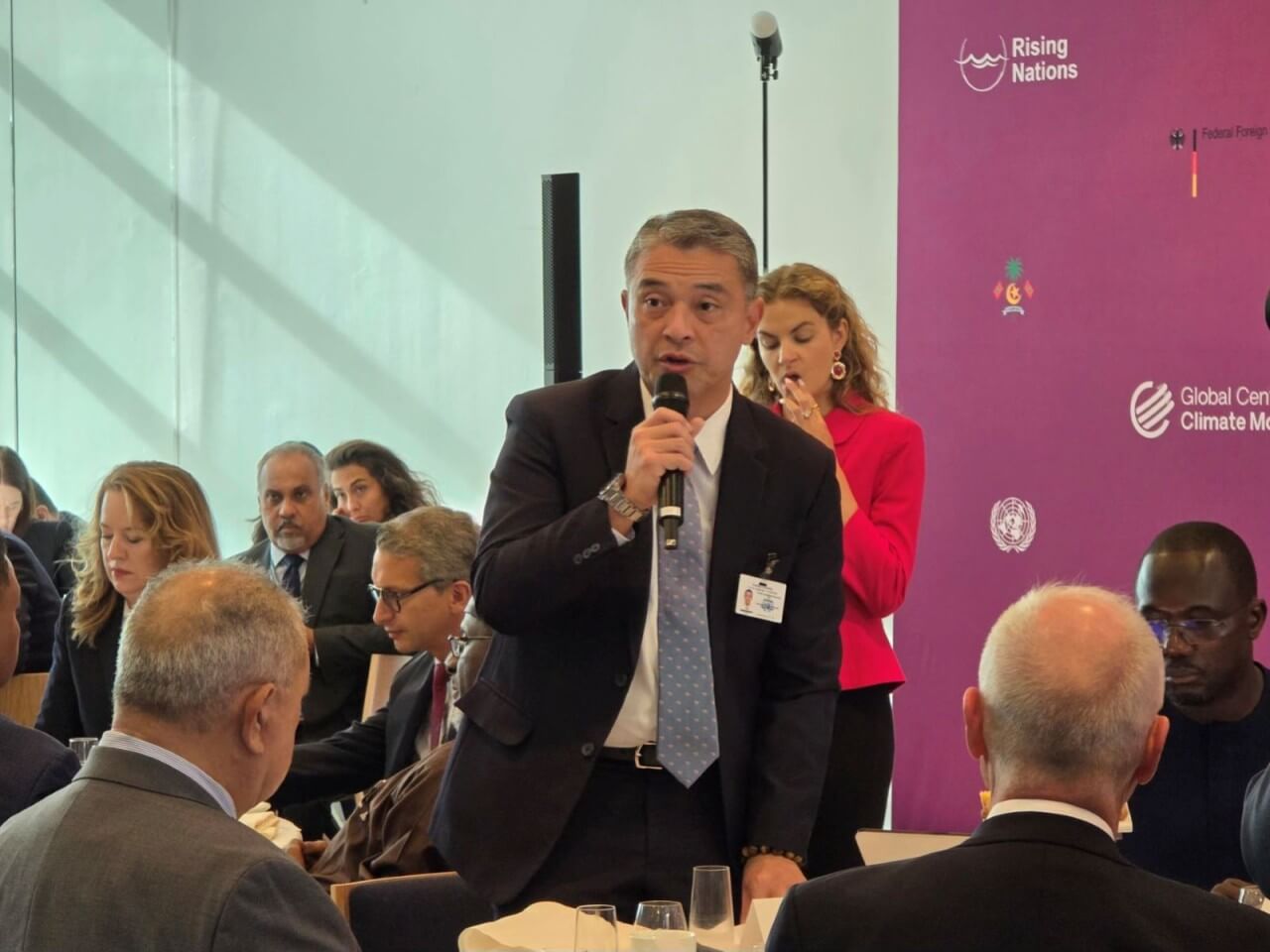
Speaking at the High-Level Breakfast for Climate Mobility Champions during the 81st United Nations General Assembly High-Level Week in New York on Sept. 23, Cuna described climate mobility as the “true human face of the climate crisis.”
He cited 8.9 million internal displacements triggered by climate-related disasters in the Philippines in 2024, highlighting the country's exposure to increasingly severe weather events. The Internal Displacement Monitoring Centre separately reported that the Philippines recorded its highest disaster displacement figure on record that year.
Right to stay
Cuna outlined three priorities for turning the Global Principles for Addressing Climate Mobility into concrete action: protecting people's “right to stay,” creating safe pathways for planned relocation and directing climate financing and risk information toward communities.
The Global Principles are a voluntary, nonbinding framework developed after consultations involving more than 130 countries and endorsed by 57 member states, according to the DENR.
Cuna said the right to stay should be supported through locally led climate adaptation and investments in resilient infrastructure.
When communities can no longer safely remain in hazard-prone areas, however, governments need mechanisms that allow people to relocate safely and with dignity.
“We must align climate finance directly with local needs, scaling up funding for community-led adaptation and improving access to localized climate risk information,” Cuna said.
The call comes as disaster displacement is rising globally. Disasters triggered nearly 45.8 million internal displacements worldwide in 2024, the highest annual figure recorded by IDMC. Storms and floods accounted for most disaster-related movements over the past decade.
$158-million plan
The Philippines is seeking to put that approach into practice through its Climate Mobility Investment Plan for 2026 to 2035, developed with the International Organization for Migration.
The $158-million portfolio targets five highly vulnerable climate hotspots across the country and is intended to connect anticipatory measures, emergency disaster response and longer-term solutions for displaced communities.
At its center is the Philippines Climate Mobility Facility, a proposed $70-million pooled grant mechanism that would provide municipalities and barangays with direct, flexible financing for community-led adaptation projects.
The approach reflects growing calls for development financing to address not only immediate displacement but also longer-term resilience and disaster risk reduction. IDMC has said investment in climate adaptation, risk reduction and community resilience can reduce the scale and impact of disaster displacement.
Ahead of COP31
Cuna urged international financial institutions and other global stakeholders to work with climate-vulnerable countries to provide affected communities with greater control over decisions about their future.
“As we build momentum toward COP31, let these Global Principles move us from reactive and fragmented crisis response to proactive, community-led pathways to climate mobility,” he said.
The discussions are part of international efforts leading to COP31 in Türkiye and the third Berlin Climate Mobility Forum scheduled for June 2027. —Ed: Corrie S. Narisma