
Insider Spotlight
The return of domestic gas to Ilijan is expected to contribute about 36 centavos per kilowatt-hour in lower generation charges beginning Sept. 1, potentially providing some relief to consumers as power costs remain a major household and business expense.
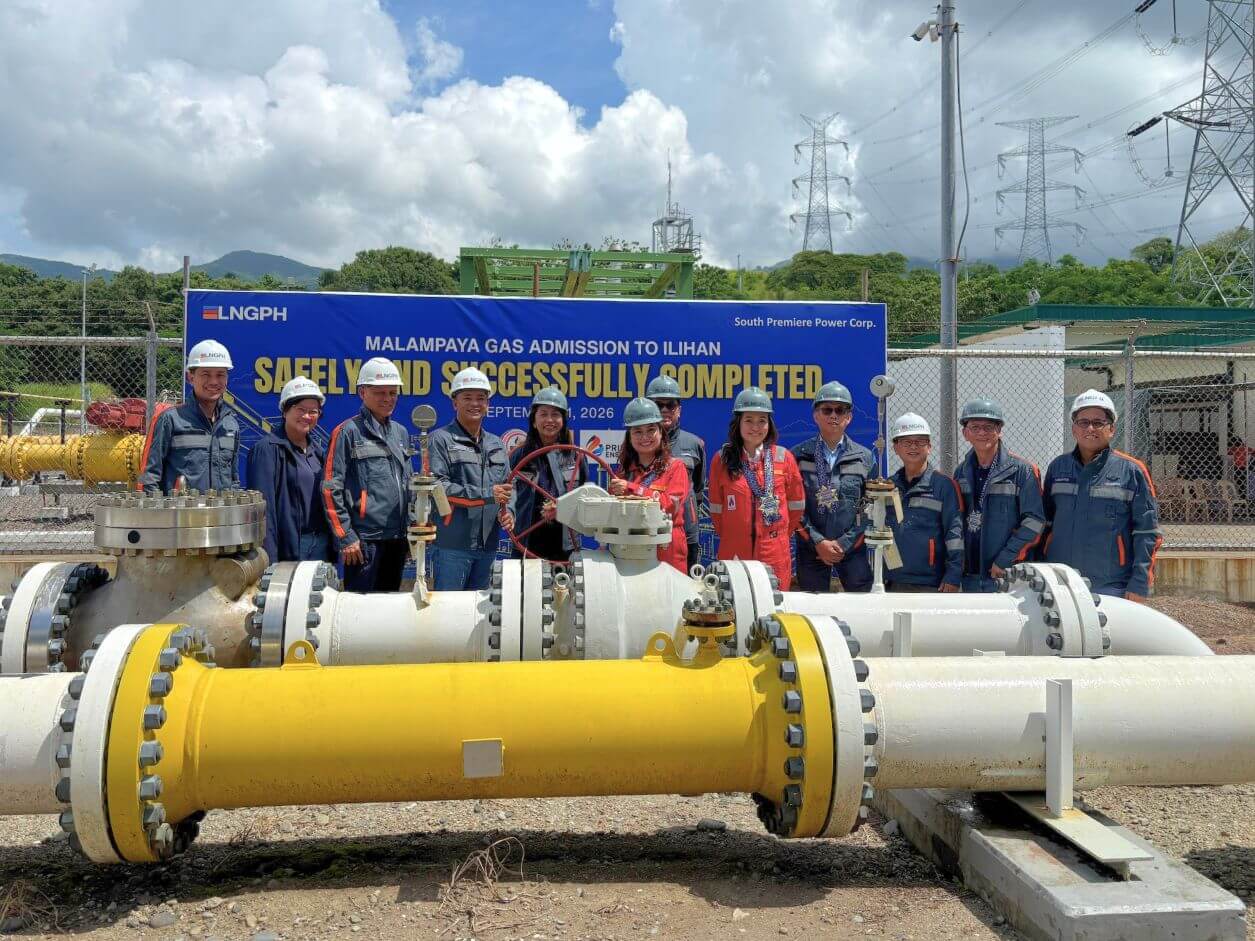
Energy Secretary Sharon Garin, Prime Energy president and CEO Donnabel Kuizon Cruz, and LNGPH president and CEO Yari Miralao led the ceremonial admission of Malampaya gas into Ilijan on Sept. 24, together with representatives from the Department of Energy, PNOC Exploration Corp., Power Sector Assets and Liabilities Management Corp. and the Service Contract 38 Consortium.
Under an interim natural gas supply arrangement, Prime Energy, operator of Service Contract 38, is supplying Malampaya gas to South Premiere Power Corp. for the Ilijan plant. The agreement covers six months, from Sept. 1, 2026 to Feb. 25, 2027.
Why it matters
Bringing Malampaya back into Ilijan gives the power sector another domestic fuel option at a time when the Philippines increasingly relies on imported liquefied natural gas, whose prices can swing with global markets.
The restored supply could also soften exposure to international fuel price volatility, Prime Energy said in a company release.
Over the past decade, Malampaya gas has maintained a price advantage over imported spot LNG, with the gap reaching more than $4 per million British thermal units at certain periods.
The return was made possible by the restoration of the Tabangao-Ilijan Pipeline through efforts involving Prime Energy, SPPC, PNOC-EC and PSALM.
Ilijan was part of the Philippines’ first indigenous gas-to-power chain following the development of Malampaya. Its original gas supply arrangement dates to 1997, four years before Malampaya began commercial production.
“What we are celebrating today is not just the admission of Malampaya gas and the beginning of a new gas supply arrangement,” Cruz said. “It is also the continued use of critical energy infrastructure that was built decades ago and maintained to serve the country’s evolving energy needs.”

The bigger picture
Malampaya has contributed more than $14 billion in revenues to the Philippine government since production began in 2001.
Prime Energy is also working to extend the field’s productive life, with Malampaya Phase 4 targeted to deliver additional domestic gas in the fourth quarter of 2026.
“Price stability, affordability, reliability and energy security — these are among the benefits of using our own Malampaya gas,” Cruz said. “Today, we celebrate this new chapter and our shared commitment to a more secure, resilient and affordable energy future for the Filipino people.” —Princess Daisy C. Ominga | Ed Corrie S. Narisma