
The country’s largest private higher education network will focus on helping students complete their education through coaching and stronger support through intervention programs.
PHINMA’s network of schools registered 174,279 enrollees in the Philippines for school year 2025–2026, up 12 percent from the previous year. The total included 53,001 freshmen and 95,770 upper-year students.

Students face learning gaps
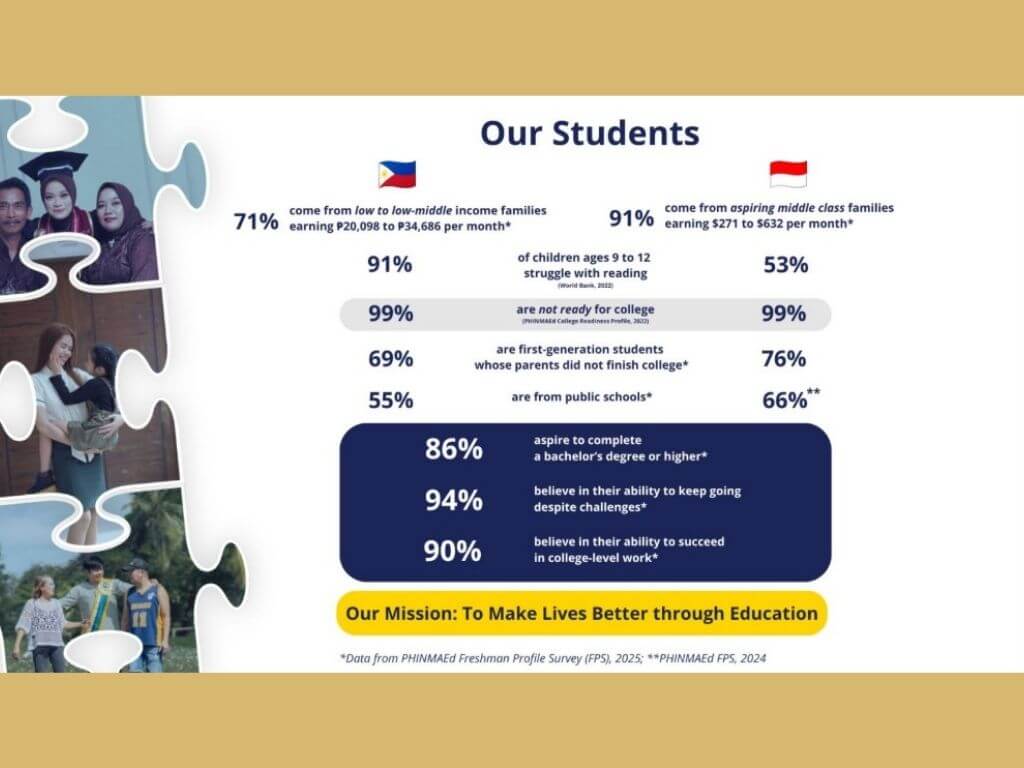
Many of its students face financial and academic challenges. About 71 percent come from low- to lower-middle-income families. Around 69 percent are first-generation college students.
Data also showed that 91 percent struggled with reading between ages nine and 12, while about 99 percent were considered unprepared for college.
Despite these obstacles, most students remain confident they can earn a degree.
A PHINMA Education survey found that 86 percent aspire to complete a bachelor's degree or higher, while 94 percent believe they can persevere through difficulties.
Yet only 38 percent of students ultimately graduate from college.
Next challenge: Keep students in college
PHINMA Education president and CEO Chito Salazar said during a press briefing that enrolling students is only the first step.
The next challenge, Salazar said, is keeping them in college and helping them pass their board examinations.
About 30 percent of low-income students in the Philippines do not make it past their first semester in college, Salazar said.
Salazar said setbacks such as failing a quiz or an exam can erode students' confidence and increase the risk of dropping out.
"The problem is not just helping them achieve a good performance academically. It is helping them stay in school, having the confidence that they can continue despite maybe failing a quiz or exam,” he said.
Students face learning gaps
Many of its students face financial and academic challenges. About 71 percent come from low- to lower-middle-income families. Around 69 percent are first-generation college students.
Data also showed that 91 percent struggled with reading between ages nine and 12, while about 99 percent were considered unprepared for college.
Despite these obstacles, most students remain confident they can earn a degree.
A PHINMA Education survey found that 86 percent aspire to complete a bachelor's degree or higher, while 94 percent believe they can persevere through difficulties.
Yet only 38 percent of students ultimately graduate from college.
Next challenge: Keeping students in college
PHINMA Education president and CEO Chito Salazar said during a press briefing that enrolling students is only the first step.
The next challenge, Salazar said, is keeping them in college and helping them pass their board examinations.
About 30 percent of low-income students in the Philippines do not make it past their first semester in college, he said.
Salazar said setbacks such as failing a quiz or an exam can erode students' confidence and increase the risk of dropping out.
"The problem is not just helping them achieve a good performance academically. It is helping them stay in school, having the confidence that they can continue despite maybe failing a quiz or exam,” he said.
Coaching students through challenges
Chief completion officer Katrina Velasco said financial concerns are not the only barriers.
"When we dig deeper, we realize that these students struggle with self-confidence, a sense of belonging and persistence to continue."
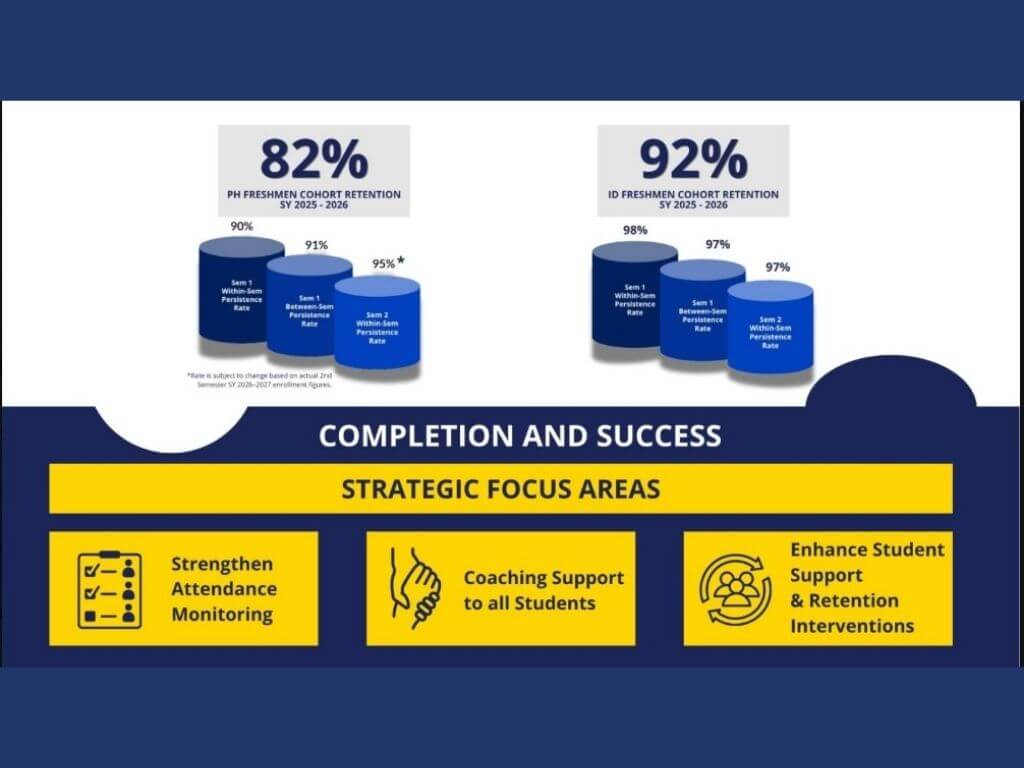
To address the issue, the group hired full-time coaches who monitor attendance and reach out to students who miss classes for two consecutive days. Their primary role is to connect with students, understand the challenges they face and determine what support they need.
PHINMA Education is also revisiting its grading system. Students at risk of failing may be allowed to revisit lessons and complete additional learning activities before receiving their final grades.
"We're trying out something in the grading system so that reaching a failing point in a subject doesn't mean it's the end. Instead, we ask: How can students retry or practice what they missed so they can move forward? So we try to institute these little mechanisms everywhere, but there's no one perfect way,” PHINMA Education chief learning officer Francis Larios said.
The “experiment” of bringing in coaches to help the students cope with their studies is showing positive results as PHINMA Education recorded an 82-percent freshman retention rate for the school year 2025–2026.
Building safer schools
PHINMA schools are also strengthening campus safety by enforcing measures including metal detectors and regular emergency drills.
Happy Tan, PHINMA Education country head, said that coaching also helps schools identify students who feel isolated or angry.
Tan said schools need to address the sense of alienation experienced by students who are more vulnerable to engage in school violence. Coaching efforts, he said, could help create a caring environment to tackle the root cause of the problem.
“Because you resort to violence when you feel that you're not being heard. And that kind of helplessness is true in all sorts of issues,” Tan added..
Addressing social media risks
The students’ prolonged exposure to social media is another pressing concern for educators. Neuroscientists have established that high screen exposure before age two often leads to premature brain maturation leading to increased anxiety by adolescence.
Rafael Calinisan, commissioner of the National Police Commission, called for stronger laws and closer coordination with online platforms to block sites that foster nefarious acts. He said users should be held accountable for harmful posts, even when they use fake names.
“We need to protect the younger ones so that they won't see it (content with violence and hate speech). We don't want to promote hate in the country … For us to succeed in educating our young, the circumstances surrounding it must also be conducive to learning,” Calinisan explained. —Ed: Corrie S Narisma

Content Producer