The initiative follows the signing of a memorandum of understanding (MOU) between Ally Power and APECO, aimed at studying clean energy and power generation opportunities within the ecozone.
What’s happening
Under the MOU, the proposed power facility may be built on a 20-hectare site inside the APECO complex.
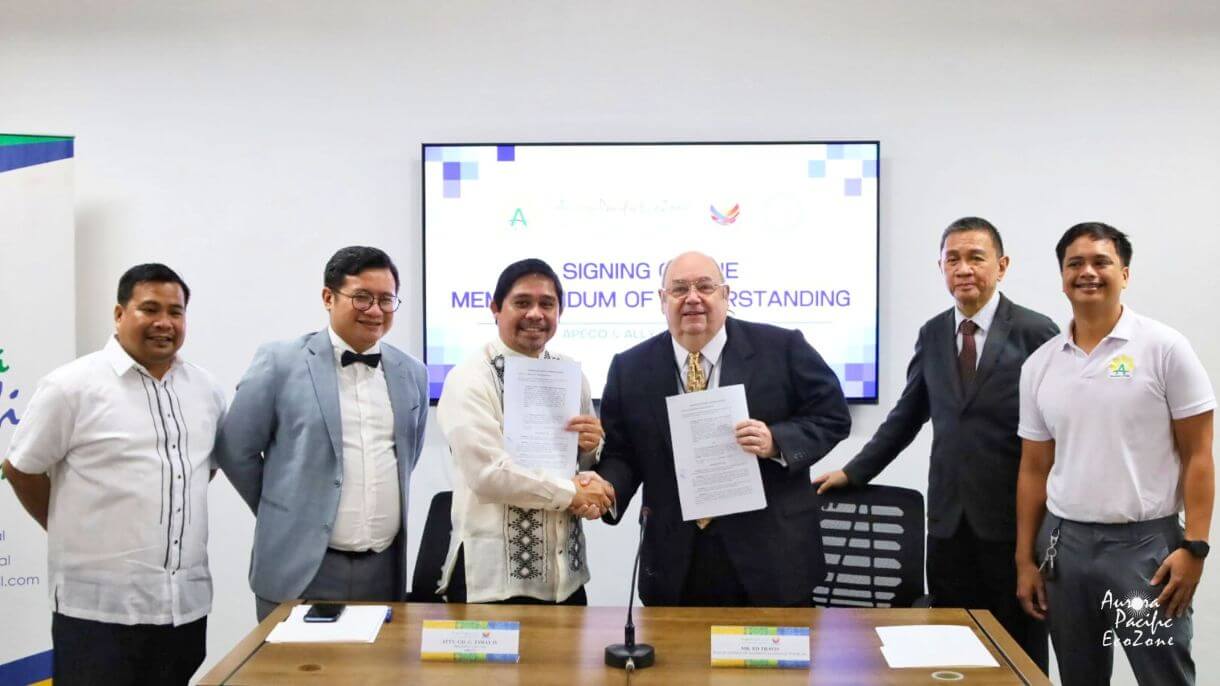
The agreement was signed on Jan. 17, 2026, by APECO President and CEO Atty. G. Taway IV and Ally Power head of business development for Asia Ed Travis at APECO’s headquarters in Casiguran, Aurora.
“The proposed project is being considered as part of broader efforts to address Aurora’s power challenges and improve the province’s long-term energy reliability,” Taway said.
Why it mattersAurora continues to face power supply constraints that limit industrial growth and investment. A large-scale hydrogen power facility could help stabilize energy supply while positioning the province as an early adopter of clean and alternative energy technologies.
Reliable power is also seen as critical to supporting ecozone expansion and attracting locators.
How it works
The MOU sets a general framework for collaboration, allowing both parties to conduct technical, investment, and regulatory studies. Specific project details—including financing and implementation—will be covered by separate agreements subject to government approvals.
Any future power supply arrangements must comply with the Electric Power Industry Reform Act (EPIRA) and Energy Regulatory Commission (ERC) rules.
Ally Power will lead the technical and investment assessments, while APECO will facilitate coordination within the ecozone.
Between the lines
The partnership reflects a growing push to align foreign capital, clean energy, and regional development outside major urban centers.
What’s next
Beyond power generation, Ally Power is also eyeing a partnership with Aurora State College of Technology (ASCOT) to establish a Clean Energy Center of Excellence, aimed at building local talent in green energy technologies.
“Our initial $200 million investment will not only build infrastructure, but also build lives,” Travis said. — Ed: Corrie S. Narisma