
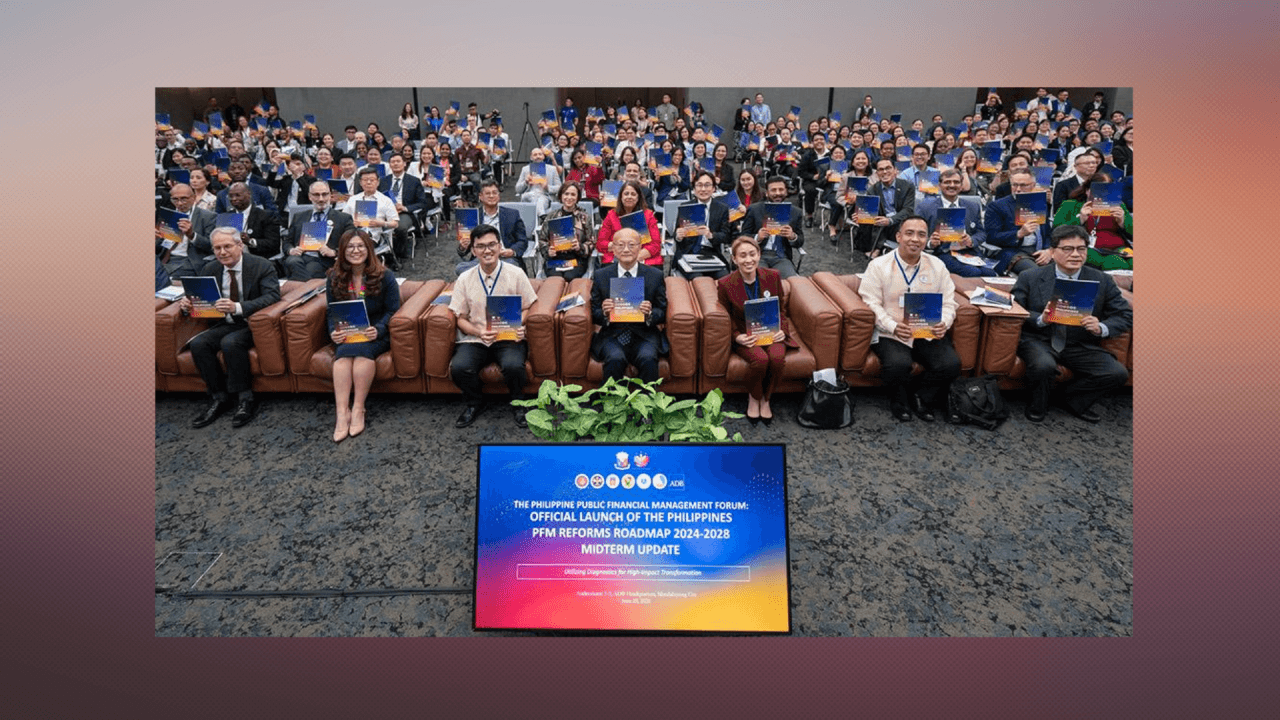
The Updated Public Financial Management (PFM) Reforms Roadmap 2024–2028 and its accompanying action plan set priorities, assign responsibilities and establish measurable targets to strengthen the management of public resources across government agencies.
Better services
ADB President Masato Kanda said the reforms demonstrate the government's commitment to ensuring that public resources generate greater value for Filipinos.
"The Philippines is taking the hard work of public financial reform head-on," Kanda said.
"By grounding reform in evidence, broad participation, and clear accountability, the government is showing how every peso can work harder for the Filipino people."
The roadmap seeks to direct more public funds toward essential services, including healthcare, education, infrastructure and social protection, while strengthening coordination among government agencies responsible for managing state finances.
ADB has served as the lead development partner supporting the country's public financial management reforms since 2023.
Stronger controls
The development bank also emphasized that stronger public financial management serves as a safeguard against corruption by improving transparency, tightening controls and strengthening accountability in the use of government funds.
ADB said it maintains a zero-tolerance policy against corruption and continues to work with member countries to strengthen public institutions and reduce leakages in government spending.
The roadmap outlines the funding, technical resources and risk management measures needed to move the reforms from planning into implementation. It also incorporates data systems that will track progress and allow authorities to adjust policies as needed.
Reform path
The reforms are led by the Philippines' PFM Committee, composed of the Department of Budget and Management, the Department of Finance and the Commission on Audit.
The initiative began in 2023 with a nationwide self-assessment involving more than 1,100 government officials, local government representatives, civil society organizations, development partners and public finance practitioners.
The PFM Committee approved the assessment in June 2024 before submitting it to President Ferdinand R. Marcos Jr. in September.
In 2025, the government completed a Public Expenditure and Financial Accountability assessment, alongside reviews examining how public spending addresses climate change, gender equality, disaster resilience and children's needs. The findings helped shape the updated roadmap and action plan.
The roadmap was formally launched on June 25 at ADB headquarters. Officials said its success will depend on sustained leadership, adequate funding and consistent implementation to strengthen public trust and improve government service delivery. —Ed: Corrie S. Narisma