While its primary mandate is to expand Metro Manila’s raw water supply, the dam has proven equally vital in mitigating floods, especially during the recent onslaught of Typhoon “Uwan.”
Largest new water source
Considered a landmark infrastructure project, the Upper Wawa Dam is poised to significantly bolster water security for Metro Manila and nearby provinces.
As the largest new water source in more than five decades, it is designed to deliver up to 710 million liters per day (MLD)—enough to supply more than 700,000 households or around 3.5 million Filipinos year-round.
With a catchment area of 262 square kilometers and a reservoir volume of 120 million cubic meters, the dam’s scale positions it as a critical pillar of long-term water resilience for the region.
Flood prevention
According to WawaJVCo, rainfall at the dam site reached 110 mm during Typhoon “Uwan,” causing the reservoir level to rise by 10 meters in just 30 hours.
Despite this significant inflow, the dam prevented 99.5 percent of potential downstream flooding, sparing the communities of Montalban, San Mateo, and Antipolo City from severe inundation.
In total, the dam stored 33.7 million cubic meters of water, significantly reducing the pressure on surrounding river systems and minimizing risks to life and property.
“The Upper Wawa Dam is more than just a water source—it is a lifeline for communities downstream,” said Joe Costales, general manager of WawaJVCo., in a press release.
“Its engineering ensures that even during extreme weather, we can protect lives while securing water for Metro Manila and Rizal.”
Built for resilience
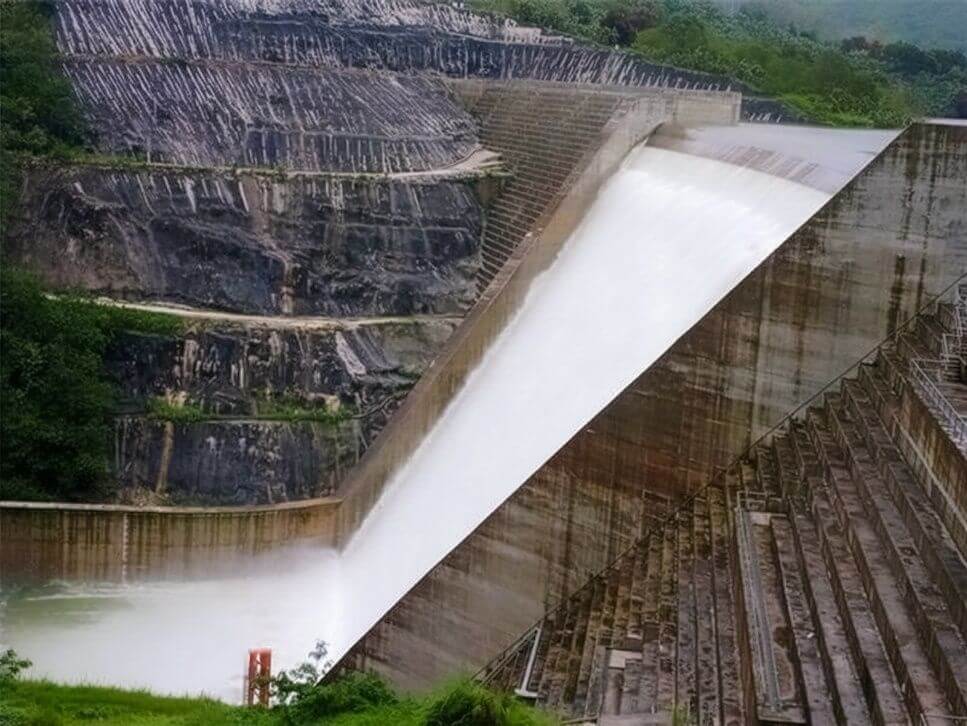
The dam features modern engineering solutions—including a stepped chute and stilling basin—that dissipate energy, reduce turbulence, and ensure controlled water flow. Designed according to ICOLD and USACE standards, the dam is built to withstand floods, earthquakes, and other natural hazards.
Local leaders also reaffirmed its impact. “The Upper Wawa Dam is a game-changer for Rizal,” Montalban Mayor Ronnie Evangelista said, citing its dual role in development and disaster resilience. —Ed: Corrie S. Narisma