Insider Spotlight
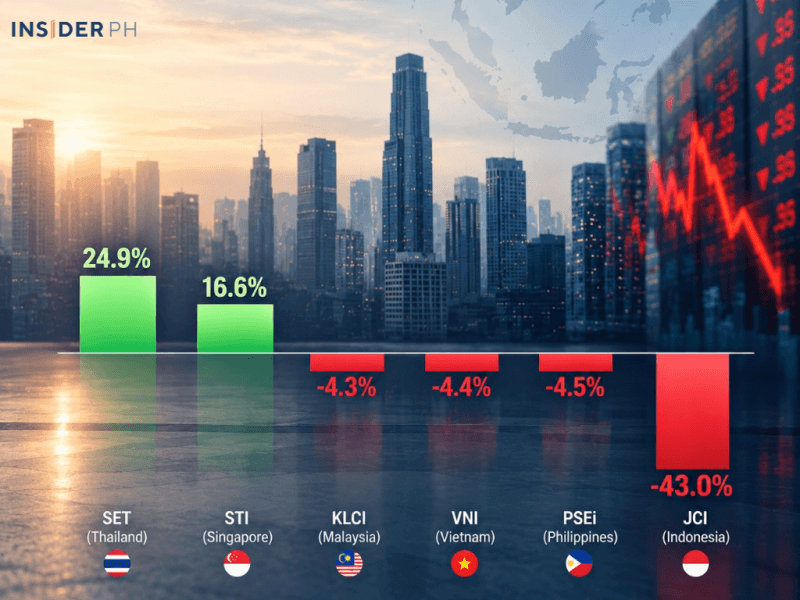
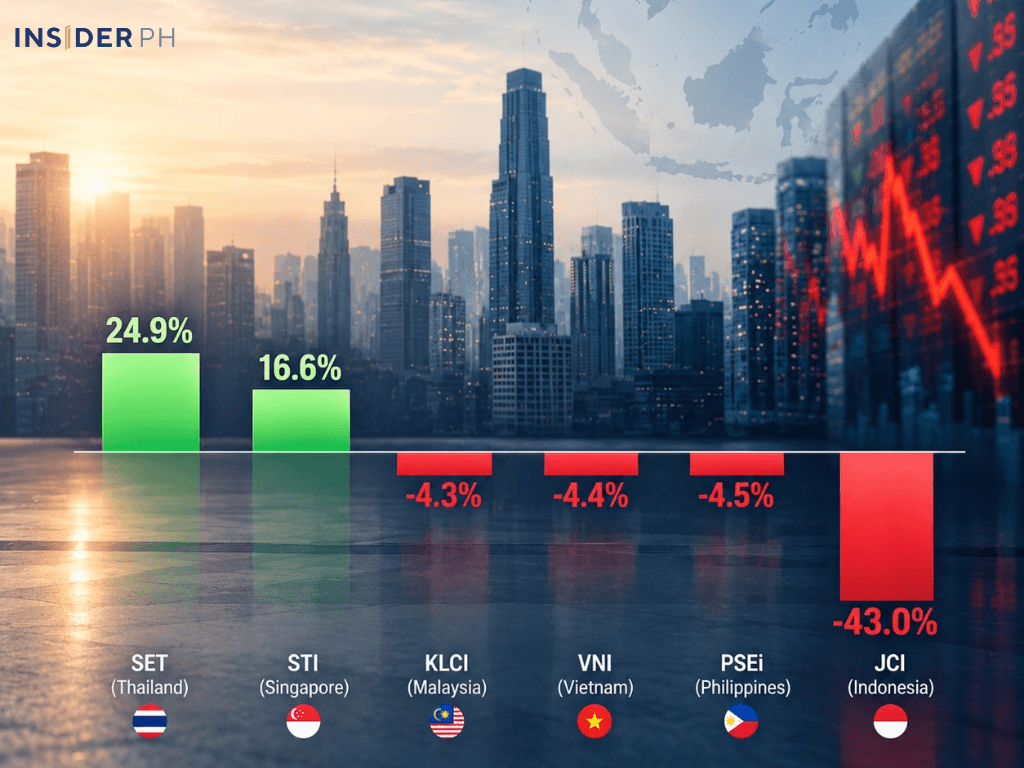
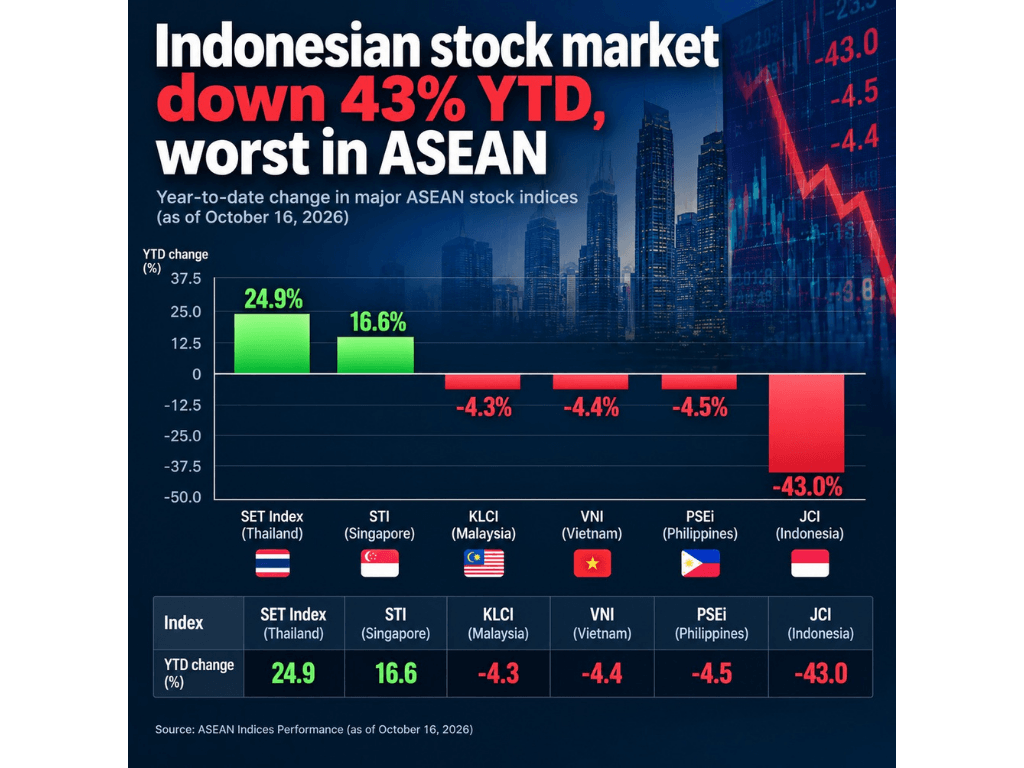
The JCI closed at 5,185.11 points on Oct. 16, 2026, down from 8,646.94 at the end of 2025, according to regional stock market performance data. On Monday, it dropped another 5% to 4,922.51 as of noontime.
Its losses dwarf those of other major ASEAN exchanges, with the Philippines, Malaysia and Vietnam recording relatively modest declines of between 4.3 percent and 4.5 percent.
Put in context, Jakarta’s collapse has been nearly nine times more severe than the Philippine market's decline.
Historic market meltdown
Indonesia's stock market plunged 11.57 percent on October 16 alone, suffering its worst daily loss since the 1998 Asian financial crisis.
The selloff followed a warning from global index provider MSCI that Indonesia could lose its emerging-market classification amid concerns over market transparency, concentrated ownership and trading practices.
Such a downgrade could force international investment funds tracking MSCI benchmarks to withdraw substantial capital from Indonesian equities.
ASEAN markets pull ahead
Thailand has emerged as ASEAN's strongest performer, with its SET index gaining 24.9 percent, followed by Singapore's Straits Times Index, which advanced 16.6 percent.
The Philippine Stock Exchange index declined 4.5 percent, Vietnam's VN-Index lost 4.4 percent, while Malaysia's KLCI slipped 4.3 percent.
Indonesia consequently trails the Philippines by 35.5 percentage points, underscoring the extraordinary scale of Jakarta's market downturn.
Even Jakarta's single-day loss on October 16 exceeded the year-to-date declines recorded by each of its three struggling ASEAN neighbors.
Investor confidence deteriorates
MSCI said Indonesia's efforts to improve shareholder disclosure, ownership transparency and market governance had yet to produce sufficient results.
The index provider is considering relegating Indonesia to standalone-market status, a classification below both emerging and frontier markets.
MSCI will accept market feedback until April 30, 2027, before announcing its final decision by June 30, 2027.
For Indonesia, the immediate challenge is restoring investor confidence and preventing further capital flight as neighboring ASEAN markets increasingly outperform its battered stock exchange.
— Edited by Daxim L. Lucas