More than 200 representatives from government, business, development institutions and the diplomatic community are expected to attend the 12th ASEAN-EU Business Summit, to be held on the sidelines of the 58th ASEAN Economic Ministers’ Meeting.
The summit comes in the closing months of the Philippines’ ASEAN chairship, with both regions seeking to expand trade and investment amid shifts in global supply chains.
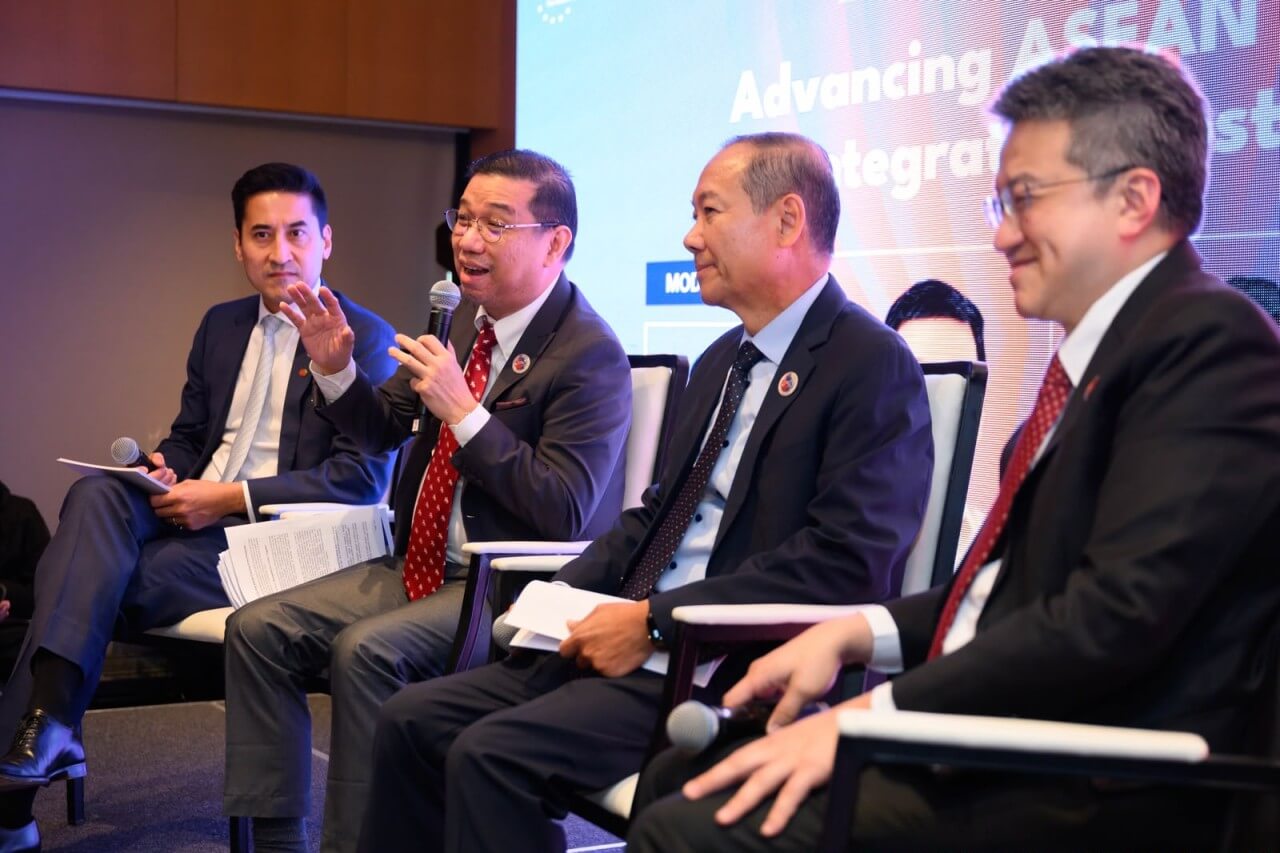
Business confidence
European companies remain upbeat about ASEAN’s growth prospects, according to the latest business sentiment survey by the EU-ASEAN Business Council (EU-ABC).
The survey found that 78 percent of respondents expect trade and investment in ASEAN to increase over the next five years.
Among companies considering changes to their supply chains, 67 percent identified ASEAN as a potential destination, putting the region ahead of China and South Asia, according to EU-ABC.
EU-ABC executive director Chris Humphrey said European companies were attracted to ASEAN’s growth potential but needed a stable business environment to make longer-term commitments.
“European companies come to this region for its growth, and they stay for its potential. What helps them commit further is straightforward: a predictable, transparent and investor-friendly trading environment,” Humphrey said in a statement.
He said ongoing trade negotiations could improve market access, reduce regulatory barriers and make customs procedures more efficient for businesses in both regions.
Growth priorities
Discussions at the Manila summit will center on four areas considered critical to ASEAN’s longer-term growth: the energy transition, financial inclusion, digital connectivity and artificial intelligence transformation, and health and nutrition.
Government speakers include Energy Secretary Sharon Garin, Budget Secretary Kim Robert De Leon, Indonesian Vice Minister of Trade Dyah Roro Esti and Malaysian Deputy Minister of Investment, Trade and Industry Sim Tze Tzin.
Senior ASEAN and European officials will also discuss broader regional cooperation, including European Commission Director-General for Trade and Economic Security Ditte Juul Jørgensen and ASEAN Deputy Secretary-General Satvinder Singh.
Executives from HSBC, Prudential, Swift, FrieslandCampina and Coca-Cola Europacific Partners are also scheduled to participate.
The summit is jointly organized by EU-ABC and the European Chamber of Commerce of the Philippines (ECCP) and endorsed by the Department of Trade and Industry under the Philippines’ 2026 ASEAN chairship.
ECCP president Diana Edralin said regulatory certainty and workforce development would be important in attracting long-term European investment.
“A successful Chairship year is defined by execution. European companies need regulatory predictability and a skilled, future-ready workforce to make long-term investment commitments across ASEAN,” Edralin said.
Private capital
The summit will also examine how private capital can support government priorities, including efforts to narrow Southeast Asia’s insurance protection gap.
Insurance penetration remains below global averages in most ASEAN markets, leaving many small businesses, informal workers and lower-income households with limited financial protection against economic shocks, organizers said.
Prudential group chief government relations and policy officer Steven Chan said insurance could contribute to economic resilience by helping households withstand financial shocks and giving businesses greater certainty to invest.
Another panel will examine digital connectivity, including how ASEAN’s payment systems, data regulations and digital infrastructure can be brought into closer alignment.
Nutrition and food security will also be discussed in the context of workforce productivity and the region’s long-term competitiveness.
Deeper ties
The summit takes place as ASEAN and the EU seek to expand economic cooperation amid changes in global trade and supply chains.
For businesses, organizers said closer cooperation could translate into greater market access and more predictable rules across the two regions.
Humphrey said the gathering would provide policymakers and companies with an opportunity for direct dialogue on barriers to trade and investment.
“This Summit is a platform for open dialogue between policymakers and the business community and a tangible opportunity for public-private collaboration,” he said. —Ed: Corrie S. Narisma