Access to schools, online learning tools and digital devices does not necessarily mean lessons are understood and retained.
World Bank estimates in 2023 showed that 91 percent of 10-year-old Filipino children could not read and understand an age-appropriate text.
The 2025 Programme for International Student Assessment (PISA), meanwhile, showed improved scores among Filipino 15-year-olds, although they remained below the Organisation for Economic Cooperation and Development average in mathematics, reading and science.
The Second Congressional Commission on Education (EDCOM 2) also reported that only 30.52 percent of Grade 3 learners were proficient or highly proficient in 2024, with proficiency declining at higher grade levels.
Beyond completion
The learning gaps have raised questions about whether conventional measures such as completed assignments, submitted modules and grades adequately show how well students understand their lessons, the National Teachers College (NTC) said in a statement.
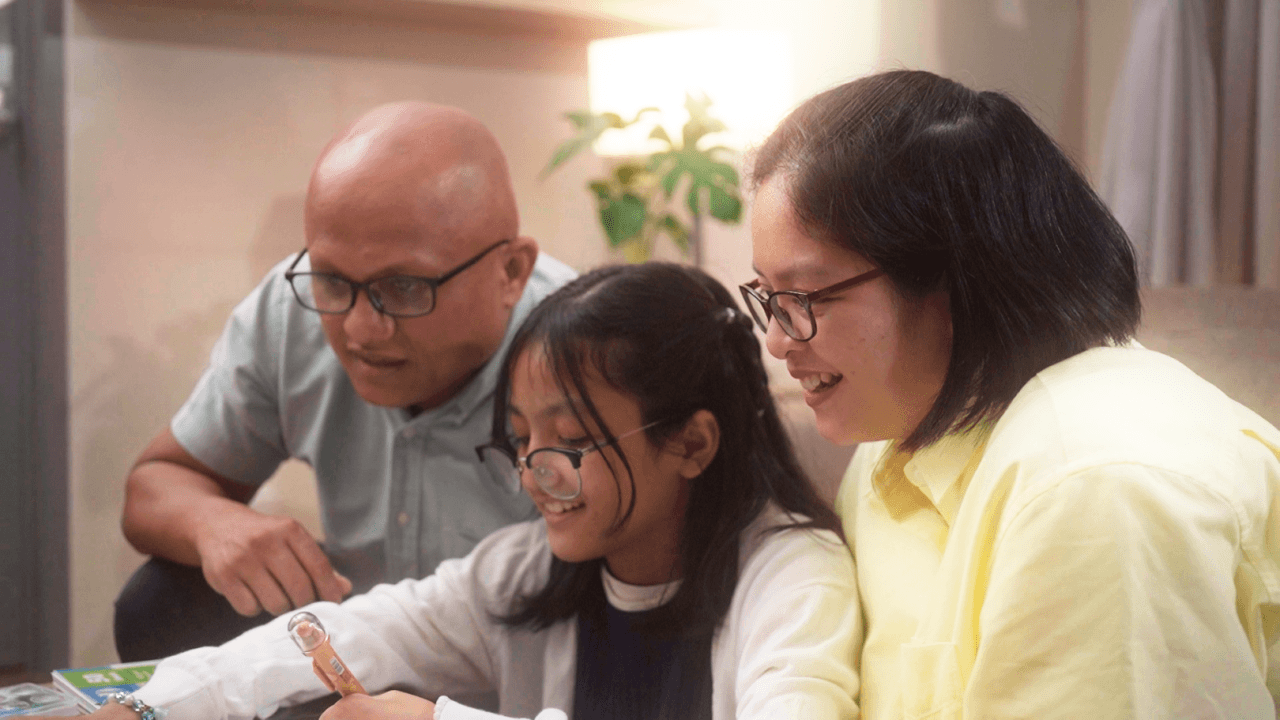
For parent Virgilio Mallari, the issue became apparent when his son Ainsley was in Grade 10.
“Lagi ko namang nakikita na tinatapos ng anak ko lahat ng modules niya, minsan nga mas maaga pa,” Mallari said in a statement. “Pero kapag kinukumusta ko siya at tinatanong kung ano ang natutunan niya, nahihirapan siyang magpaliwanag.”
(I always see my son completing all his modules, sometimes even ahead of schedule, Mallari said. But whenever I ask how he is doing and what he has learned, he has difficulty explaining it.)
The same challenge is evident from a teacher’s perspective.
Carlos Angelo Morales, a junior high school English teacher, said determining whether every student has understood a lesson can be difficult, particularly when much of the interaction takes place online.
“It is not always possible to tell in a typical week whether an entire class has truly understood the material,” Morales said. “Most of our interactions happen through the platform, so I only get direct insight into a student's understanding during our synchronous sessions, particularly when I call on them to answer questions or explain their thinking.”
Students may complete activities and follow instructions but still have difficulty explaining or applying what they have learned.
Tracking understanding
The distinction between completing requirements and understanding lessons is one area that National Teachers College (NTC) Homeschool: SmartClass says it seeks to address.
The program allows students to learn at their own pace while giving families flexibility in organizing their schedules. It also uses assessments intended to determine whether students understand and can apply lessons before moving forward.
“Dito sa NTC, hindi namin gustong nagdadalawang-isip ang mga magulang sa kalagayan ng pag-aaral ng anak nila (Here at NTC, we don’t want parents to have doubts about how their children are doing in their studies),” NTC Homeschool: SmartClass program lead Jhanine Barateta said.
“Hindi lang kami completion, but also comprehension. Importante na dala ng bata ang natutunan niya saan man siya mapunta.” (We focus not only on completion, but also on comprehension. What matters is that children carry what they have learned with them wherever they go.)
Subject matter experts also guide students throughout the program and provide parents with information on areas where their children are performing well or may require additional support.
Parents’ role
For Ma. Elizabeth Domingo Villamor, a primary learning adviser and aunt of Grade 10 student Elizah Zabiel Villamor, homeschooling provided a clearer picture of her niece’s progress.
Villamor said enrolling her niece in NTC Homeschool gave her a better understanding of how she learns and what motivates her to study.
She added that performance-based assessments and guidance from teachers helped her identify areas where her niece needed additional support.
The experience underscores a broader challenge for parents and educators: measuring learning not simply through completed requirements, but by determining whether students can understand, explain and apply what they have been taught. —Ed: Corrie S. Narisma