The infrastructure arm of the Aboitiz Group presented its “Bohol Moving Forward” framework during a recent meeting with provincial officials and tourism industry representatives. The framework outlines a 90-day plan and longer-term strategies covering sales missions, participation in trade expos, tourism-product development and sustained destination marketing.
It is intended to support a more coordinated approach to expanding Bohol’s tourism markets and creating opportunities for the local industry.
The framework also supports Gov. Erico Aristotle Aumentado’s tourism priorities, with Bohol-Panglao International Airport (BPIA) serving as a gateway for efforts to attract more visitors. The airport is operated by Aboitiz InfraCapital Bohol Airport Corporation (ABAC).
Bohol, one of Central Visayas’ key tourism destinations, is known for its white-sand beaches, heritage churches and the Chocolate Hills. It is also home to the country’s first and only UNESCO Global Geopark, while Panglao is a major hub for resorts and diving.
Discussions
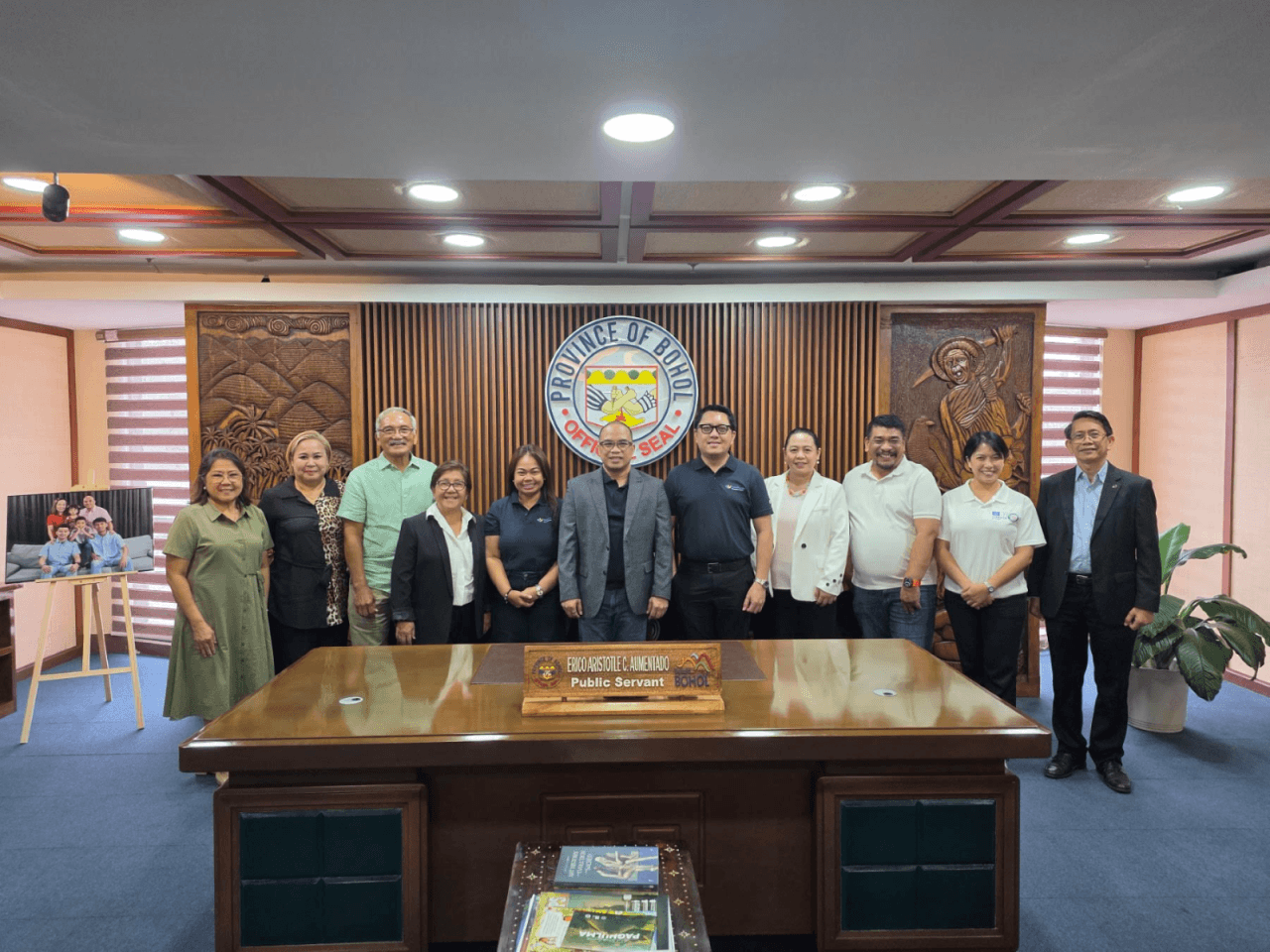
AIC first vice president and head of corporate affairs Christopher Camba and AIC Airports head of tourism and destination marketing Blessie Cruz met with provincial officials and tourism industry representatives to discuss ways to develop Bohol’s tourism products, expand its markets, strengthen destination promotion and improve air connectivity.
Aside from Aumentado, those present at the meeting included Provincial Tourism Council co-chair Lucas Nunag, Bohol Association of Hotels, Resorts, and Restaurants president Doer Escoto and Bohol Alliance of Travel and Tour Operators president Lourdes Sultan.
Provincial Administrator Aster Caberte, chief of staff Filipina Piollo, Provincial Tourism Office head Joanne Pinat and Provincial Legal Office head Handel Lagunay also attended.
The discussion also covered opportunities to strengthen Bohol’s domestic and international connectivity, along with more targeted destination promotion, tourism product development and efforts to make the province’s tourism offerings more accessible through greater online visibility and booking options.
Asian markets
Bohol continues to target markets such as South Korea, China and Taiwan while seeking to diversify its tourism products. The framework aims to coordinate the efforts of government, tourism operators, businesses, the airport and other industry stakeholders.
“We are looking at where we can further strengthen Bohol’s tourism sector, from developing our tourism products to improving the province’s visibility as a destination,” Aumentado said.
“Working closely with the private sector and our tourism stakeholders allows us to identify opportunities and move forward with initiatives that respond to the needs of our province and our visitors.”
The collaboration also draws on BPIA’s role as a key gateway for the province’s tourism industry. Camba said the company would explore how the airport could support the province’s plans by improving access to domestic destinations and expanding international connectivity.
“Bohol has a clear tourism agenda, and our role is to work alongside the Provincial Government and the tourism industry to support those priorities through connectivity and the airport,” he said.
Cooperation
Cruz said efforts to improve air connectivity should reflect the destination’s needs and the tourism experiences Bohol seeks to offer.
“By working with the Province, the Bohol Tourism Council, tourism organizations, and airline partners, we can better align opportunities in air connectivity with the experiences and tourism products that Bohol wants to offer,” she said.
AIC Airports said it would continue working with the Bohol provincial government, Bohol Tourism Council, tourism groups, businesses, airlines and other stakeholders to strengthen air connectivity and improve the visitor experience.
In addition to BPIA, AIC also operates Mactan-Cebu International Airport in Cebu and Laguindingan International Airport in Misamis Oriental. —-Ed: Corrie S. Narisma

Contributor